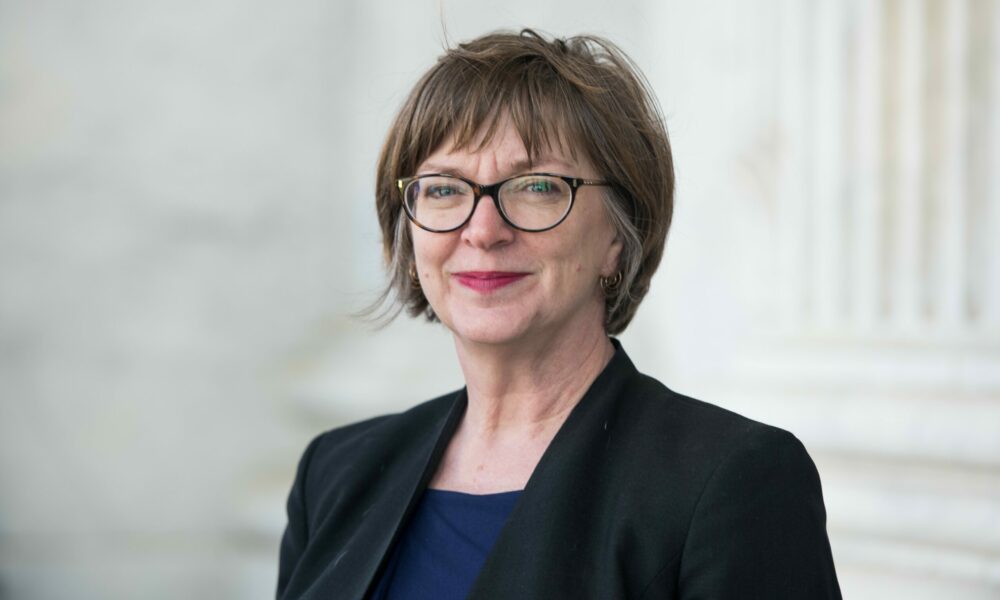
Today we’d like to introduce you to Sara Barber.
Alright, so thank you so much for sharing your story and insight with our readers. To kick things off, can you tell us a bit about how you got started?
Advocacy has been a thread that has run through my life ever since I can remember and are rooted in the generosity of spirit displayed by my father. A career navy man, he believed that his children needed to discover their own belief systems, to find their own way to their true selves, and so encouraged us to read, listen, watch and participate in politics and culture in ways that seemed right to us. This foundation is important because the ideas of justice and societal change are a map on which we draw our own road. Our journey is unique and references our own experiences within family, community, and society, but these roads can converge, and it is within that meeting that we can come together to make meaningful change.
I have spent the past two decades working as an advocate for a specific type of social change that will require a complete transformation across culture and systems if we are to fully realize our vision of a South Carolina free from domestic violence and sexual assault. Every year, we recoil as we see the numbers of domestic violence homicides, yet there is a numbness to the ongoing high levels of violence within homes and relationships in our communities. Over 25,000 people call hotlines in South Carolina every year asking for help. Over 35,000 people receive services from domestic violence organizations and rape crisis centers every year. Daunting numbers that still don’t capture the terrible impact this violence has on people living around us.
My beginning in this field was with a batterer intervention program; a program that worked with domestic violence offenders within the criminal justice system. It was a job I didn’t want but took because I needed regular hours after the birth of my eldest child. Who would want to work with offenders? When I responded to people’s inquiries about what I did, I began to anticipate the moment of silence and intake of breath before they said “That must be hard. How do you do that?” But I grew to like the work. It is intensely frustrating but also filled with hope. I had an amazing boss, an Episcopal priest, who always counseled us to approach the work with humility, to recognize the enormity of what our work was, and to be open to the capacity of people to change.
I had terrible experiences doing this work—a victim I had a lot of contact with was murdered by her husband (a former client) in such a horrific way that it left her son who witnessed it institutionalized. I found out when I read the paper the following Monday morning. I still vividly remember a conversation with a young woman, who was both in despair and totally resigned, detailing her husband’s escalation and threats, and my belief that he would kill her over the weekend. It is work that you take home and that stays with you hard. But I had good experiences too, saw men change, and heard from their partners of the difference in their relationships. I truly learned not to judge people on the face they present, to trust my gut instincts, and to acknowledge that individuals are complex and that meaningful accountability must also acknowledge people’s humanity. Hope for transformation can be hard to sustain, but it is a critical part of all advocacy, especially in this area of social work.
For the past seven years, I have been at SCCADVASA, focusing on supporting our members providing direct services, providing education and training on best practices, building a legal assistance program, and pushing forward changes in system responses and public policy. We take one step at a time and we build a foundation for the next step towards a culture of prevention and accountability while ensuring that the services available for victims are responsive to their individual needs
Alright, so let’s dig a little deeper into the story – has it been an easy path overall and if not, what were the challenges you’ve had to overcome?
Advocacy for change is never a smooth road. It’s much more like the roads we have in South Carolina, where we try to navigate the best way through the potholes, metal plates, and detours!
People often see domestic and sexual violence as being criminal justice problems, and that if you change the law, justice will be served as they see it depicted on TV. These issues go so far beyond the police and court response. Housing, access to healthcare, mental health care, legal assistance, financial and employment assistance, child custody–the list of issues that impact survivors runs across every system. Sometimes, we’re accused of not staying in our lane, but the reality is that every lane is our lane.
The COVID-19 health crisis has added another dimension of difficulty for survivors who are now experiencing a personal crisis within a community crisis. Programs have had to switch to new service models that include telehealth and alternative sheltering arrangements. This has bought up another system issue–do victims and survivors have access to broadband to be able to access telehealth services? In some areas of the state, the answer is probably “no”, creating another layer of hurdles that we have to overcome.
The foundation of advocacy is in creativity, and I am constantly amazed at the solutions advocates working with survivors come up with to ensure that they are able to help create individual paths to healing.
Thanks for sharing that. So, maybe next you can tell us a bit more about your business?
Our Mission The South Carolina Coalition Against Domestic Violence and Sexual Assault (SCCADVASA) serves as the collective voice promoting the prevention of domestic violence and sexual assault in South Carolina.
Our Vision
A South Carolina free from domestic violence and sexual assault.
Who We Are
Established in 1981, SCCADVASA is a leader in representing the critical needs of survivors of domestic violence and sexual assault and is a pivotal voice in violence prevention. We advance our work through advocacy, education, and collaboration. See below for a listing of our Board of Directors and staff.
Our Coalition
We are an independent 501(c)(3) non-profit organization, but our approach is highly collaborative with our 22 domestic and sexual violence members who provide direct services in communities across the state, affiliates, partners, and allies. SCCADVASA is an active member of several national domestic and sexual violence networks and we work in partnership with Coalitions in all 50 states and several US territories.
Our Core Values
Our vision of a violence-free South Carolina demands united action. We believe in the value of collaboration to create change, passionate advocacy for survivors, education for prevention, and the credibility that emerges from persistence. We ground our work in humility as we learn and grow, leveraging our collective leadership to influence the greater good.
Our Work
40,635 survivors of domestic violence and sexual assault were served directly by member organizations and an additional 22,960 accessed 24-hr hotlines. In 2019, SCCADVASA provided over 750+ hours of professional capacity-building assistance to improve victim services, trained over 2300 victim service professionals and advocates, and distributed approximately 5,000 SCCADVASA brochures and tip sheets on promising practices.
Any advice for finding a mentor or networking in general?
I don’t have a mentor per se but instead, rely on the colleagues I workaround. This includes employees, contract staff, board members, partners in systems, and others who will always find the time to listen and share their experiences. Sometimes the person you need maybe a “Keeper of Complaints”–someone who you can trust and share your struggles with, but who will also jolt you to start looking for solutions. Sometimes, it may be time to read a book, where you can discover the words that will move you forward. And sometimes, it’s someone who says the words that keep your hope alive–“It takes courage to initiate a courageous conversation and it takes fortitude to finish it. Hang in there.”
The most important thing is to always be open to the wisdom of others, who just by virtue of having a different lens may help you find a way forward.
Contact Info:
- Email: info@sccadvasa.org
- Website: www.sccadvasa.org
- Instagram: https://www.instagram.com/sccadvasa/
- Facebook: https://www.facebook.com/SCCADVASA
- Twitter: https://twitter.com/SCCADVASA
- Youtube: https://www.youtube.com/channel/UCPm2JTv6uuevZfjVNC3f4QA