
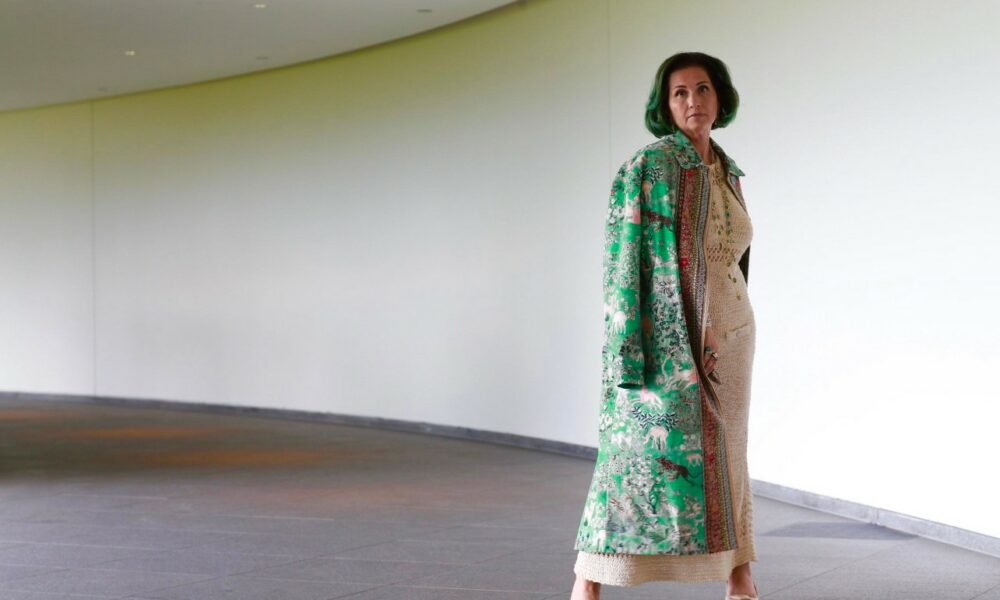
Today we’d like to introduce you to Dr. Reem El Mutwalli.
Hi Dr. Reem, we’d love for you to start by introducing yourself.
Established in 2018, the Zay Initiative is a UK-registered non-profit organization dedicated to preserving and sustaining Arab culture. Its mission is to safeguard tangible and intangible heritage by collecting, documenting, conserving, and exhibiting traditional Arab costumes and bodily adornments. Textiles, clothing, and jewelry hold a vast array of valuable resources currently at risk of being lost or misclassified due to insufficient documentation. These artifacts carry the stories of people from various walks of Arab life, especially women, leaving behind traces of their history. The Zay Initiative houses over 2000 precious pieces crucial in fortifying, encapsulating, and preserving a significant part of Arab history.
One of the organization’s proudest achievements is the creation of the largest online bilingual (Arabic & English) digital archive. This resource contains over 626 articles, providing many intricate details about Arab culture. Additionally, our dual dictionary terms have expanded remarkably to over 696, further enriching the comprehensive resource. The Zay Initiative is not only focused on preserving the existing collection but also works diligently to contextualize the remaining articles through the efforts of a small but dedicated team of researchers and contributors. Furthermore, the collection is enhanced by featuring a series of blogs written by guest contributors and lending parts of the collection to exhibitions in museums and institutions within the Arab region and globally.
Now, to shed light on the origins of the Zay Initiative, it all began with my passion for preserving the UAE Dress Collection (Sultani) during my doctoral research. As I worked on my thesis, I was fortunate to receive many of the dresses that were later featured in my published work titled “Sultani, traditions renewed; Changes in Women’s Traditional Dress in the UAE during the Reign of Shaykh Zâyid bin Sultân Âl Nahyân 1966-2004,” which was released, as the first edition of the book, in 2011. The book remains a comprehensive reference on the evolution of dress in the UAE, standing as the first to showcase the only published collection of UAE traditional dress. Back then, the Sultani Collection comprised 180 traditional UAE dresses. However, it has evolved to over 800 pieces today, seamlessly merging into the larger 2000-strong (and growing) Zay Initiative collection. This assemblage encompasses artifacts from various regions across the Arab world, making it a significant repository of Arab cultural heritage.
As the book and collection gained recognition and garnered followers, I took the initiative to establish the Instagram account @sultanibookuae. This step was driven by realizing how new technologies and social media promote and preserve national heritage and culture. Through this platform, I created a daily interactive space where people from all walks of life could engage in live dialogues about this culturally and historically significant collection. The positive response and increasing engagement encouraged me to broaden my outreach by creating @thezayinitiative. This enabled me to gather more facts, document cultural nuances, and delve deeper into the rich history of the Arab world. This journey ultimately culminated in the development of a blog and the gradual buildup of a digital archive, which took shape as ‘The Zay Initiative.’
We all face challenges, but would you describe it as a relatively smooth road?
Where should I begin? There are so many tasks to undertake! The process is extensive and often solitary. Much of the work happens discreetly, behind the scenes, and at the back end, as they say nowadays. Cataloging, researching, writing, verifying, and publishing demand significant effort and long hours, all lovingly provided by volunteers and dedicated individuals that make up the Zay Initiative team. Securing funding is daunting, as the Zay Initiative relies on individual contributions and personal support. Thus, I invite your readers to join our community and support the platform by becoming a ‘friend’ of the Zay Initiative. Yet, the most formidable hurdle lies in fostering a culture that comprehends the essence of philanthropic giving, where people recognize the value of donating to a cultural platform focused on general benefit without expecting an immediate return.
Thanks – so, what else should our readers know about your work and what you’re currently focused on?
What began as an organic personal collection quickly became a formidable museum collection. This growth has been made possible by generous individual donations from people worldwide who have encountered our work through exhibitions, social media, and published articles, becoming inspired by the Zay Initiative’s ethos.
Among our donors are Arab immigrants eager to preserve their mother countries’ heritage. Additionally, Arabs residing in the Arab world wish to honor the memory of their parents or grandparents by contributing their stories along with cherished garments. Many expatriates, who once lived in the Arab world, have also chosen to send us clothing items, cherishing the significant time they spent working and living in the region. While some articles are acquired through auctions and dealers to complete specific outfits or fill gaps in the collection, we highly value donated items due to the priceless names and personal narratives that accompany them. Therefore, we warmly invite your readers to connect with us and send us tokens of their loved ones to enrich the Zay Initiative’s growing collection further.
The Zay Initiative offers valuable resources to support students in reaching their academic goals. These resources include a free Digital Archive and Digital Dictionary accessible worldwide. Additionally, registered individuals can access a digital library of webinars, videos, and podcasts. Bimonthly blogs concentrate on various aspects of Arab culture. Furthermore, for those who wish to study up close and in person, there is an available physical collection, accessible upon request.
The Arab world, with 200 million Arabs spread across 22 countries on two continents, shares a common, or just one, dress culture. Many don’t realize that being Arab is a cultural trait, not strictly tied to race or religion. Within the Arab world, there is a rich diversity of communities, ethnicities, religions, and cultures, including Muslims, Christians, Jews, Yazidis, Kurds, Armenians, Amazigh, Barbar, and other minorities. This diversity is evident not only among countries but also within them. Therefore, Arab clothing reflects individual preferences, cultural beliefs, and personal styles in the Middle East or globally. Arab dress, particularly women’s dress, has faced stereotypes. What is considered modest fashion has often been misunderstood as synonymous with traditional Islamic clothing. However, over the past decade, scholars, journalists, fashion designers, entrepreneurs, and bloggers have highlighted the emergence of modest fashion as a niche market embraced by various faith groups, including Jewish, Christian, Muslim, and secular individuals. Social media, growing affluence among Muslim women consumers, and increased awareness of modest fashion among non-Muslims have contributed to modern and stylish modest style. As a result, modest fashion has become mainstream, appealing to people of all faiths and cultures.
Meanwhile, the hijab, worn by Muslim women, has been unfairly stigmatized and used as a symbol of fear. Women wearing hijab risk being stereotyped, socially excluded, judged, and sometimes even abused due to misconceptions. However, it’s crucial to recognize that the hijab is often a matter of personal choice, reflecting modesty, privacy, or respect for culture, religion, and tradition. Veils come in various forms, serving practical purposes such as protection from the elements and even empowering autonomy to promote a more precise understanding and appreciation of Arab and Islamic cultures, The ZayInitiative’ss website offers insights into these cultures, and interested individuals can register for the monthly newsletter to keep up with updates to the blog, the collection, as well as related events and programs.
The Arab region has a rich history of empowering women who have played pivotal roles in their societies as mothers, educators, community leaders, and entrepreneurs. During the early days of Islam, women were actively encouraged to pursue education, as stated in the Quran: “The seeking of knowledge is obligatory for every Muslim, male and female” While Arab women have traditionally worked outside the home, mainly in agriculture, trade, and manufacturing. However, in recent years, more and more Arab women have entered the workforce in professional occupations such as medicine, law, and engineering. In a positive trend, more Arab women are now being elected to office, significantly influencing the political landscape of the Arab world. Nevertheless, despite these advancements, women in the Arab region still encounter numerous challenges. These include persisting gender inequality, violence against women, and restrictive laws that hinder their progress.
Are any books, apps, podcasts, or blogs that help you do your best?
We follow many podcasts and webinars related to fashion in general and Arab fashion history in particular. Dressed_podcast is one such account that is very useful.
Pricing:
- We collect and do not sell!
Contact Info:
- Website: www.TheZay.org
- Instagram: @thezayinitiative
- Facebook: @thezayinitiative
- Linkedin: @thezayinitiative
- Twitter: @thezayinitiative
- Youtube: @thezayinitiative


Image Credits
Dr. Reem Tariq El Mutwalli, founder of The Zay Initiative, showing outfits from The Zay Collection. (C) TheZayInitiative, photographed by @broosk_saib.