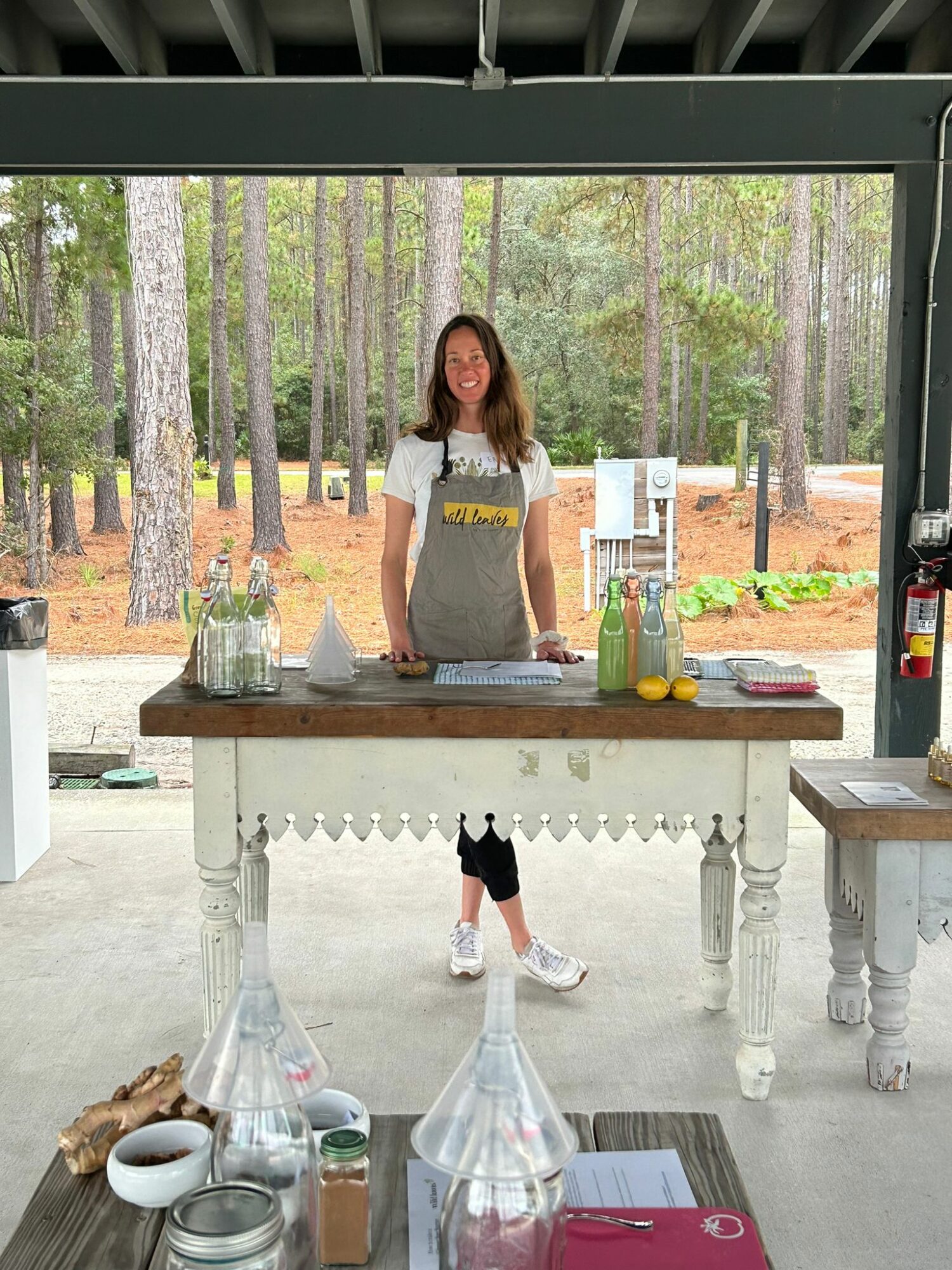
Today we’d like to introduce you to Erin Schafranek.
Hi Erin, we’re thrilled to have a chance to learn your story today. So, before we get into specifics, maybe you can briefly walk us through how you got to where you are today?
Back in 2007–2008, I was teaching English and practicing yoga in a small fishing village on the southern coast of South Korea. It was a beautiful place, and the food was some of the freshest I had ever experienced, including the seemingly endless varieties of kimchi that were part of everyday life.
At the time, my home base was Berlin, Germany, so when I returned after that year of teaching, I brought those flavors and traditions of South Korea back with me. I started making large batches of kimchi and other Korean foods, filling big jars and sharing them with friends. Over the years, making ferments became a constant in my kitchen. There was almost always a jar of kimchi, sauerkraut, kombucha or something bubbling away in my refrigerator.
Living in Germany, sauerkraut is everywhere, but long before fermentation became a trend, I was already making my own ferments simply because I loved the process, the flavors and the connection to traditional food practices.
Eventually, I studied to become a clinical herbalist and began giving talks and workshops on topics like gut health and the different connections within the body. Many people are familiar with the gut-brain axis, but there are many other fascinating relationships happening within our bodies. Inevitably, conversations would often lead back to probiotics – and from there, to fermentation and the fact that we can create these probiotic-rich foods and drinks ourselves.
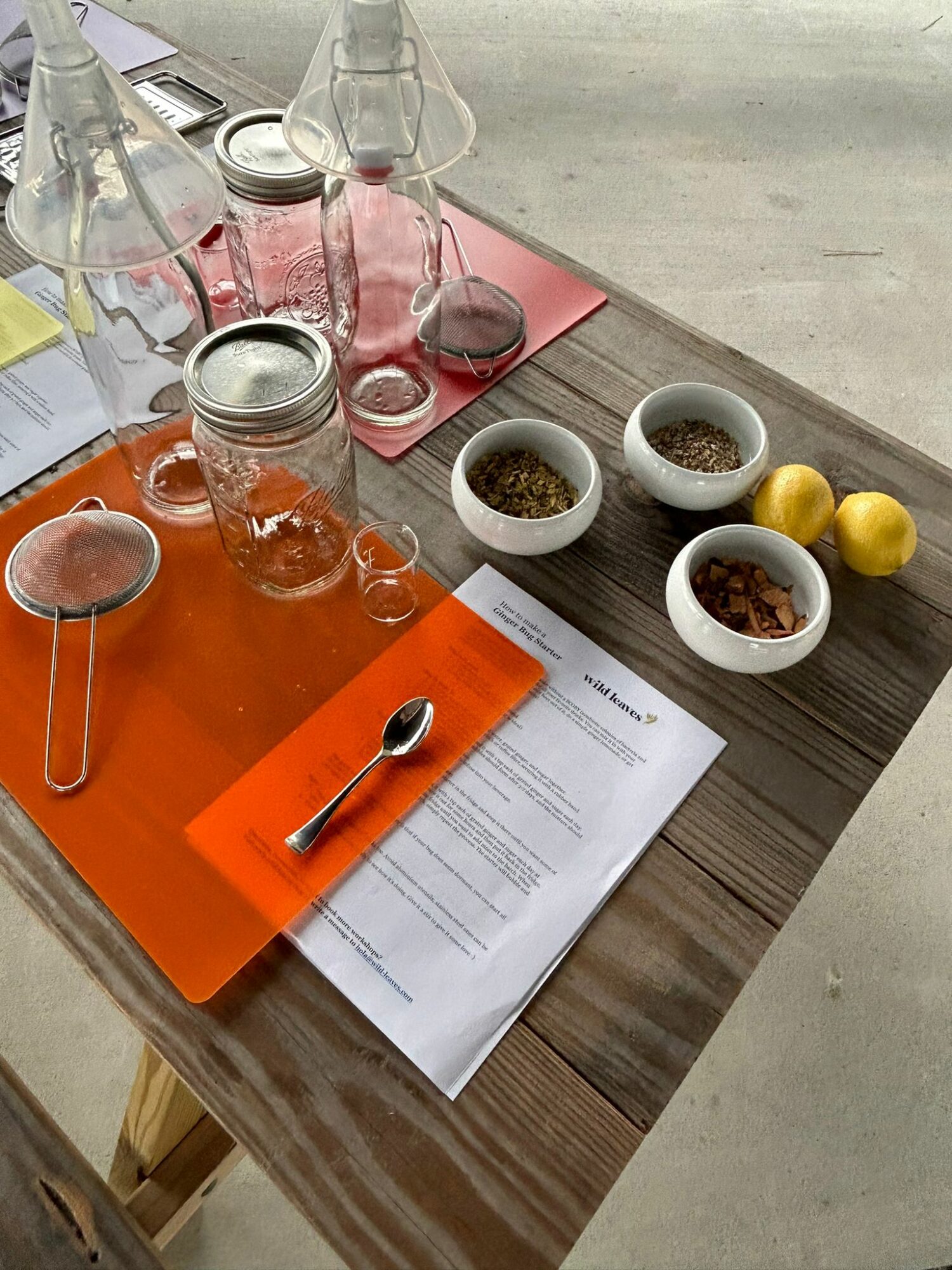
People started asking me to teach them how to make their own fermented foods, so I began offering regular fermentation workshops in Berlin, including events for groups and corporate team-building experiences.
Probiotic drinks like kombucha are becoming more familiar to people today, but as a yoga teacher and someone who has always been interested in traditional foods, I have been making my own kombucha, water kefir, wild sodas, and other fermented drinks for many years.
People’s Probiotics brings together the things I’ve gathered through travel, food, fermentation, herbs, and teaching – all right here in Savannah and the Lowcountry.
Would you say it’s been a smooth road, and if not what are some of the biggest challenges you’ve faced along the way?
That question actually made me laugh out loud – because no, it has definitely not been a smooth road!
Long story short, I started a company under a different name in Berlin, and that experience taught me a lot about what it takes to build a product-focused business. I learned that starting with products right away can be challenging because there are so many moving parts, from production costs, inventory, sourcing and operations to marketing and building an audience that knows and trusts your brand. There are a lot of upfront expenses before you even have the opportunity to grow.
Through that experience, I realized that, in my opinion, a more sustainable path is often to begin with a service: build relationships, create a community, and grow a following first – then introduce products once that foundation is there.
Of course, I’m only partially taking my own advice with People’s Probiotics!
The difference this time is that I’m building it in a way that feels sustainable. The overhead is manageable, there is a real interest in probiotic foods and drinks here in Savannah and the Lowcountry, and I believe there is a great opportunity to bring more education, creativity, and connection around fermentation to this area in a way that will allow me to share the things I’ve been making and teaching for years. I’m following my gut on this one since products are a central part of what I’m creating from the beginning, but in a more manageable way.
As you know, we’re big fans of People’s Probiotics. For our readers who might not be as familiar what can you tell them about the brand?
People’s Probiotics is a fermentation-focused company bringing together traditional food practices, herbalism, wellness and the flavors I’ve collected throughout my travels. At its heart, it is about creating living foods and drinks that are not only good for the body, but also fun, creative and connected to culture.
Over the years, I’ve lived in and traveled through places like South Korea, Europe, India, and beyond – and every place has influenced the way I think about food, herbs, fermentation, and community. I’ve taken those experiences, flavors and traditions and woven them into People’s Probiotics so people can experience a little bit of that adventure without having to leave their own city or town.
What makes the company unique is that fermentation is never exactly the same twice. Even when you follow the same recipe, every batch has its own personality. The microbes, ingredients, seasons, and small variations all create something different. I want every workshop, event, and product experience to feel like a fermentation project: something hands-on, curious and alive.
I also want to shift the way people think about health. Healthy food doesn’t have to feel restrictive, complicated, or like another chore on a checklist. It can be colorful, flavorful, social and something you genuinely look forward to.
Beyond products, People’s Probiotics is about creating experiences and bringing people together around traditional food practices, fermentation and herbalism. My vision is to eventually have a dedicated space where people can gather, learn, taste, experiment and build community around these traditions. I envision a taproom where kombucha, water kefir lemonades and herbal sodas are on tap; where microbial mocktails are served while a local dj plays for an art exhibition, or a seasonal menu is offered along with fermented snacks and charcuterie boards, and where people can join bubbly workshops.
The name People’s Probiotics reflects exactly what I hope this becomes: probiotics for the people, made by people. It’s about bringing back the knowledge of traditional food practices and making them accessible, approachable and part of everyday life.
Can you talk to us about how you think about risk?
I would say that I’ve taken quite a few risks throughout my life, although I don’t always register them as “risk” in the moment. They usually feel more like following curiosity and trusting that I’ll figure things out along the way.
In my early twenties, I bought a one-way ticket to Germany with very little money and built a life in Europe and Asia for over 20 years. I’ve lived in several different countries, adapted to new cultures, learned from different food traditions and continually started over in new environments.
Starting People’s Probiotics is another example. Building a food and beverage company comes with a lot of unknowns – production, regulations, operations, marketing, and the ongoing work of building awareness and trust. My previous experience of starting a company in Berlin gave me a clearer understanding of what that actually involves, but it didn’t remove the uncertainty. It just made me more aware of it.
There is also a more recent moment that paints a good picture of how I think about risk. After moving back to the U.S., I was working during the day as a personal trainer, focusing on flexibility, strength, and mobility, and in the evening I was serving at a restaurant to make ends meet. After a particularly long and exhausting shift, I found myself asking for a way out of the restaurant. Not just wishing for it, but setting a clear intention that if something shifted, I would trust it and act on it. I asked for a sign: that sign was if I got one new personal training client the next day then I would quit the restaurant within the week and trust the process.
I had no marketing push, no leads or pipeline behind it. But the next day – I kid you not – completely unexpectedly, I received two new personal training clients through a referral! They just came in. I took it as my sign, followed through on my end of the bargain, and quit my restaurant job within the week. Since then, things have continued to open up in ways I couldn’t have planned for from the beginning.
I guess those are good examples of how I approach risk: I follow the signs, make moves at the right time, trust myself to go for it, and figure things out along the way.
Contact Info:
- Website: https://www.peoplesprobiotics.com
- Instagram: peoples_probiotics
- Facebook: People’s Probiotics (https://www.facebook.com/profile.php?id=61590885297146)