Today we’d like to introduce you to Trisha Palmer.
Alright, so thank you so much for sharing your story and insight with our readers. To kick things off, can you tell us a bit about how you got started?
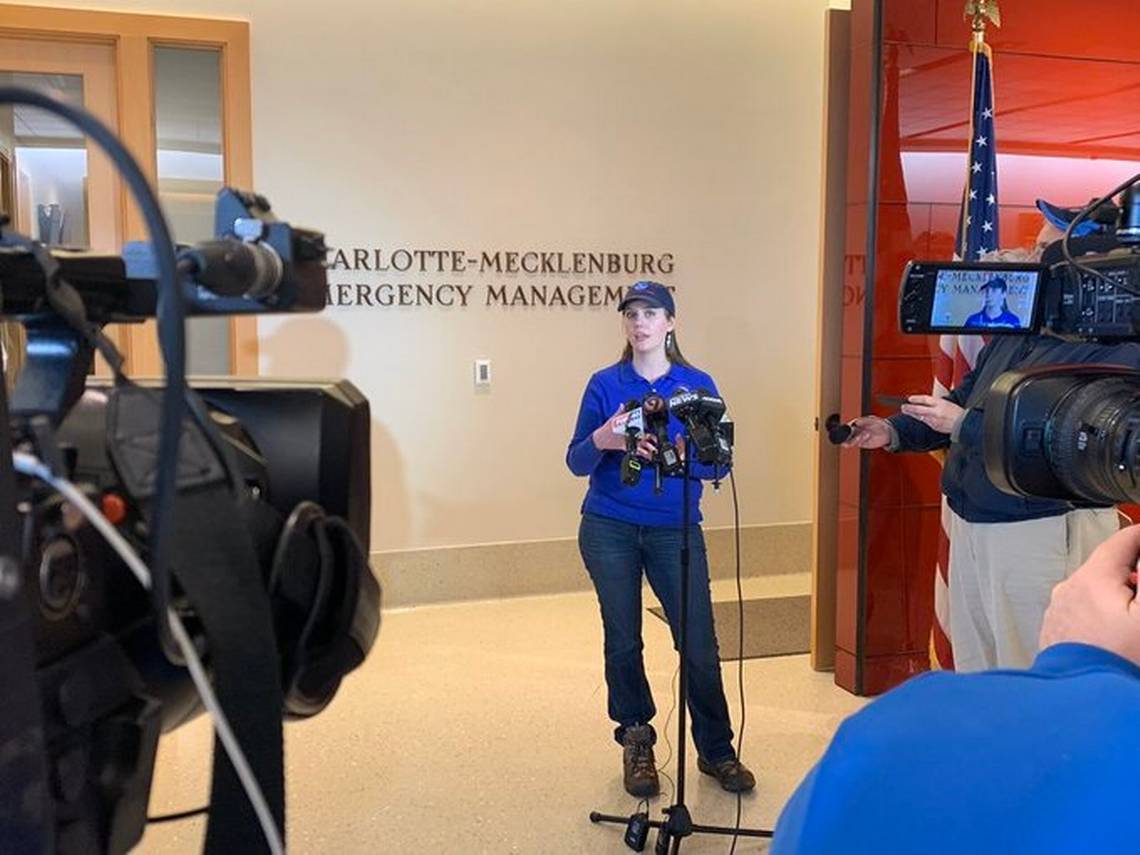
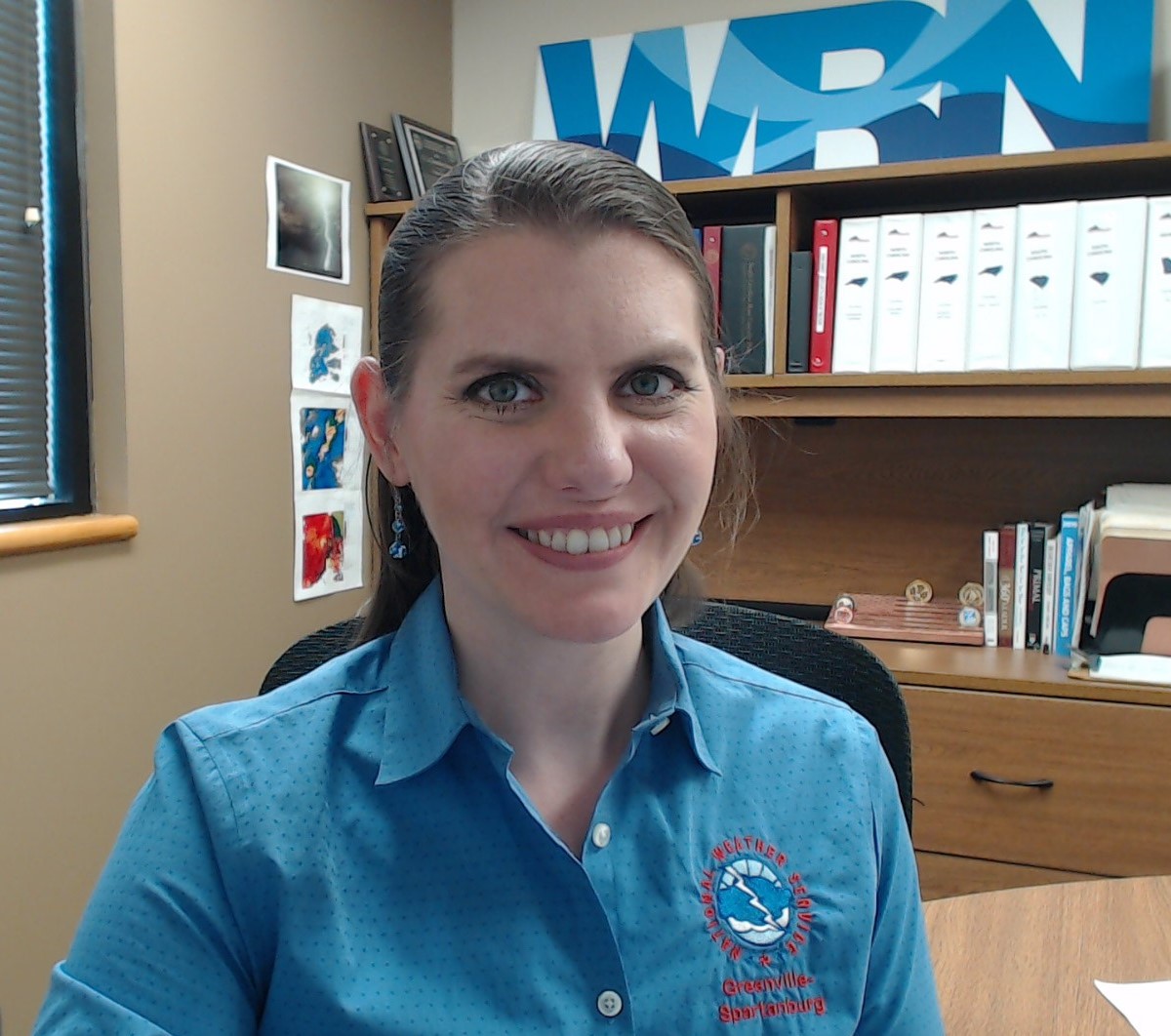
I am the Warning Coordination Meteorologist (WCM) at the National Weather Service (NWS) in Greenville-Spartanburg. In my role, I am the NWS’s liaison with external customers and oversee outreach and preparedness efforts. Additionally, one of my primary responsibilities is to ensure that the NWS office delivers the highest quality weather related products and services to our customers and partners. As a WCM, I also oversee our Impact-based Decision Support Services program, where we provide high impact weather briefings and support key decision makers in local, state, and federal government.
For most meteorologists, inspiration came when we were children, and it was no different for me. In May of 1957, when my father was a child, his family was in a very large tornado in Ruskin Heights, MO. Rated F5, dozens of people were killed. My grandmother was terrified of storms for the rest of her life, but my father grew up respecting them. He became an Air Traffic Controller first in the Air Force and then with the FAA, where weather was front-and-center for his job. These stories filled my head as a child in the 80s, and I was fascinated by the power of nature. I was born and raised in Arkansas, where severe storms (and deadly tornadoes) are unfortunately a common occurrence, and I soaked up what I could (e.g., I learned geography while watching The Weather Channel as a young child). The June 1987 edition of National Geographic had an extensive article on tornadoes, and I read it so much, almost every day, that I wore the magazine out (I was gifted a new one for Christmas that same year).
Arkansas has no colleges or universities that offer meteorology or atmospheric science as a major. Given my parents’ financial hardships as I was growing up, as one of four children (two older brothers and a younger sister), I could not guarantee the ability to go out-of-state to college, though it’s what I desperately wanted. My oldest brother chose to join the Army after high school, but my second brother was preparing for college upon graduation in 1997. On March 1, 1997, as I was still trying to figure out how I could possibly make an out-of-state education happen, there was a large outbreak of tornadoes, including an F4 that impacted my school district. I knew several kids whose homes were destroyed, and an acquaintance lost his father. At that point, there was no going back; I was determined to find a way to make it work, no matter the cost. My second brother saw my passion, took a hard look at his future, our parents’ finances, and made a decision that shaped the rest of my future. He decided NOT to go to college and instead join the Navy. He was apathetic about furthering his education anyway, and he knew it would be nearly impossible for me to go out-of-state if we were both in college. (As a note, my education was still my responsibility, and I needed loans to cover what scholarships and grants did not, but my parents couldn’t even have helped with day-to-day expenses, gas, and other fees that cropped up, much less the transportation back-and-forth.)
Meanwhile, in speaking with my high school counselors about my college options, they unfortunately provided no assistance. They didn’t even know where to begin. So, my father took matters into his own hands and took me to visit the NWS office in Little Rock. It was life-changing! I met wonderful people, some of whom I’m still in touch with now almost 30 years later. They guided me, advised me and my parents on college (and scholarship/tuition waiver) options, and in the fall of 1998 I began at the University of Oklahoma (OU). It was a dream come true! Meteorology is certainly not an easy degree (my Calculus IV professor said: “There is GOOD curl and divergence, and there is BAD curl and divergence. You meteorologists have the BAD curl and divergence!”), but those four years were amazing.
It also turned out that the Little Rock NWS office had a student employee who was moving on. They asked me if I wanted the job, and simple as that, so began my career in the NWS! I continued working at the Little Rock office during summer and Christmas breaks from OU. While at OU, I met my future husband, Joshua Palmer, who was also a meteorology major. We married right after graduation, and then we went to NCSU for grad school. I was able to transfer my position from the Little Rock NWS office to the Raleigh office, where upon completing my Master’s Degree I was able to convert to a permanent position.
We moved to the Atlanta area in 2005, which is a unique location in that it has a co-located River Forecast Center (RFC). My husband worked on the RFC side, while I was a forecaster at the NWS office. After 10 years there, we made the move to the Greenville-Spartanburg NWS office, where I was promoted to a “lead meteorologist” (a shift supervisor) and my husband started his position as Senior Service Hydrologist. In 2019, I was promoted to the WCM position. We love this office, love the area, and are happy to be raising our children in Upstate SC!
Would you say it’s been a smooth road, and if not what are some of the biggest challenges you’ve faced along the way?
My career has not been a smooth road, but it’s been worth it.
From a personal perspective, it’s never easy when, as a married couple, you are both in an extremely specialized field, and you are both trying to advance. Once you add children to the mix, it gets even more complicated, especially if, like us, you never have any family living nearby to help. My husband and I had to do the “long distance marriage” thing multiple times; the last time we had a pre-schooler and I was pregnant.
As a Federal employee, there have been occasional struggles that have cropped up my entire 26+-year-career, but those are understood to be part of the job. Budget constraints, staffing shortages, new/different policies, etc., but these things come and go.
Of course, there are also the difficult weather events. The hardest is when people lose their lives. As meteorologists, we ask ourselves many questions when this happens, mostly some form of “What could we have done better?” Sometimes a warning wasn’t as timely as it should have been, or sometimes we wonder if we could have communicated the threat better. And sometimes, there’s absolutely nothing we can do. No matter how many small, medium, or large events you work, nothing can ever REALLY prepare you for “the big one.” Helene was one of those storms that defines people’s careers. I’m one of the more seasoned employees in the office and have worked my share of events, but NOTHING like Helene. We have people in the office who are at the beginning of their careers, and already had their career-defining event. As a meteorologist, it didn’t matter how good or timely the warnings were or if we nailed the forecast. Helene was absolutely devastating.
No matter the struggles, it’s about perspective. Since my husband and I both have careers in public service, we strongly believe in truly SERVING. We are here to provide forecasts and warnings for the protection of life and property, and in the end, we know that God will guide us. In my every day work, Colossians 3:23 is my guiding principle.
Appreciate you sharing that. What should we know about National Weather Service Greenville-Spartanburg?
The mission of the NWS is to “provide weather, water and climate data, forecasts, warnings, and impact-based decision support services for the protection of life and property and enhancement of the national economy.” The NWS is an entity in the Federal government: part of the National Oceanographic and Atmospheric Administration (NOAA) under the Department of Commerce (DOC). There are 122 individual NWS offices across the country, 13 River Forecast Centers (RFCs) that provide river forecasts, 21 Center Weather Service Units (CWSUs) co-located with Air Route Traffic Control Centers to provide aviation forecasts, and nine “National Centers”, such as the National Hurricane Center and the Storm Prediction Center. For more information, see www.weather.gov/about.
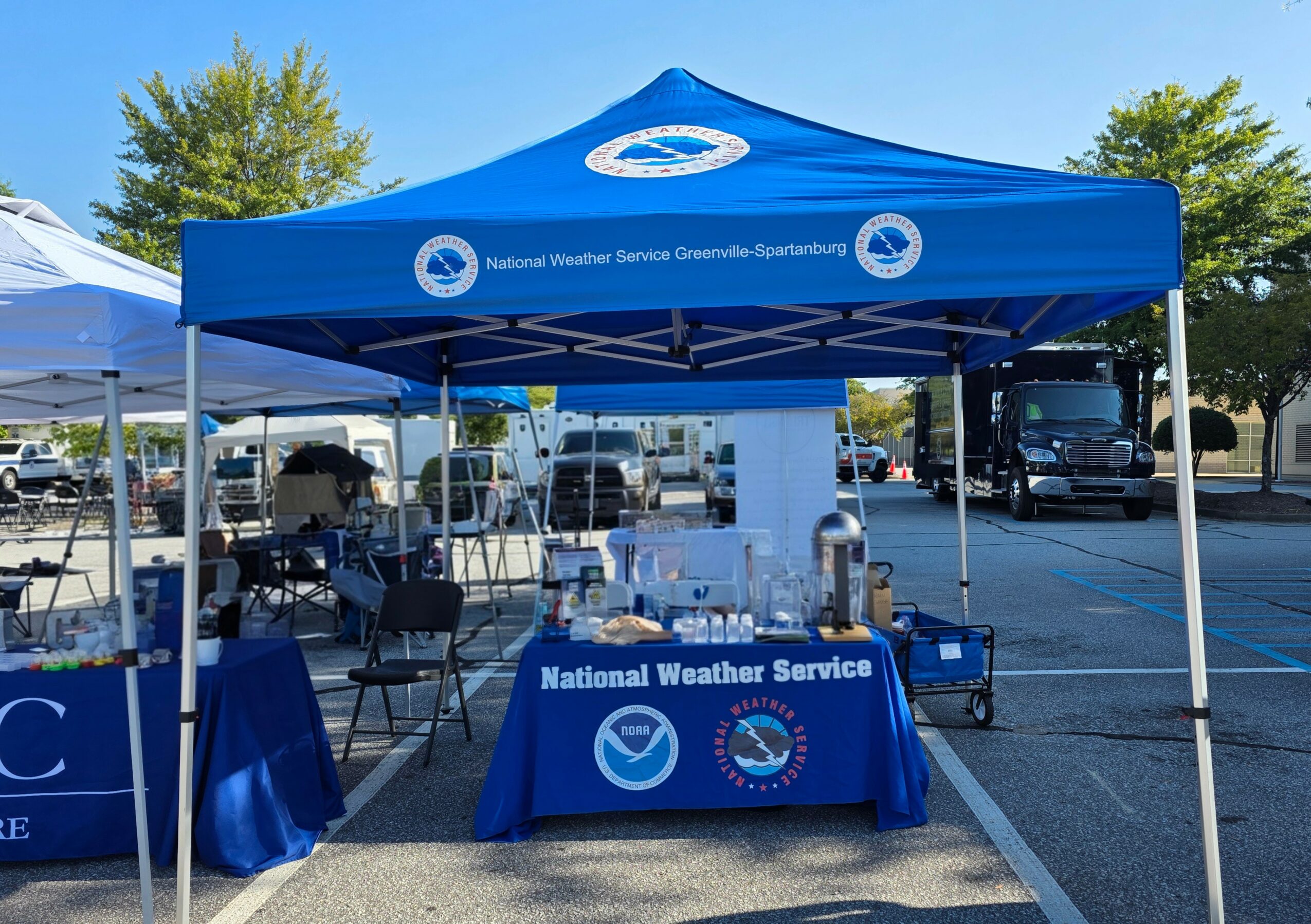
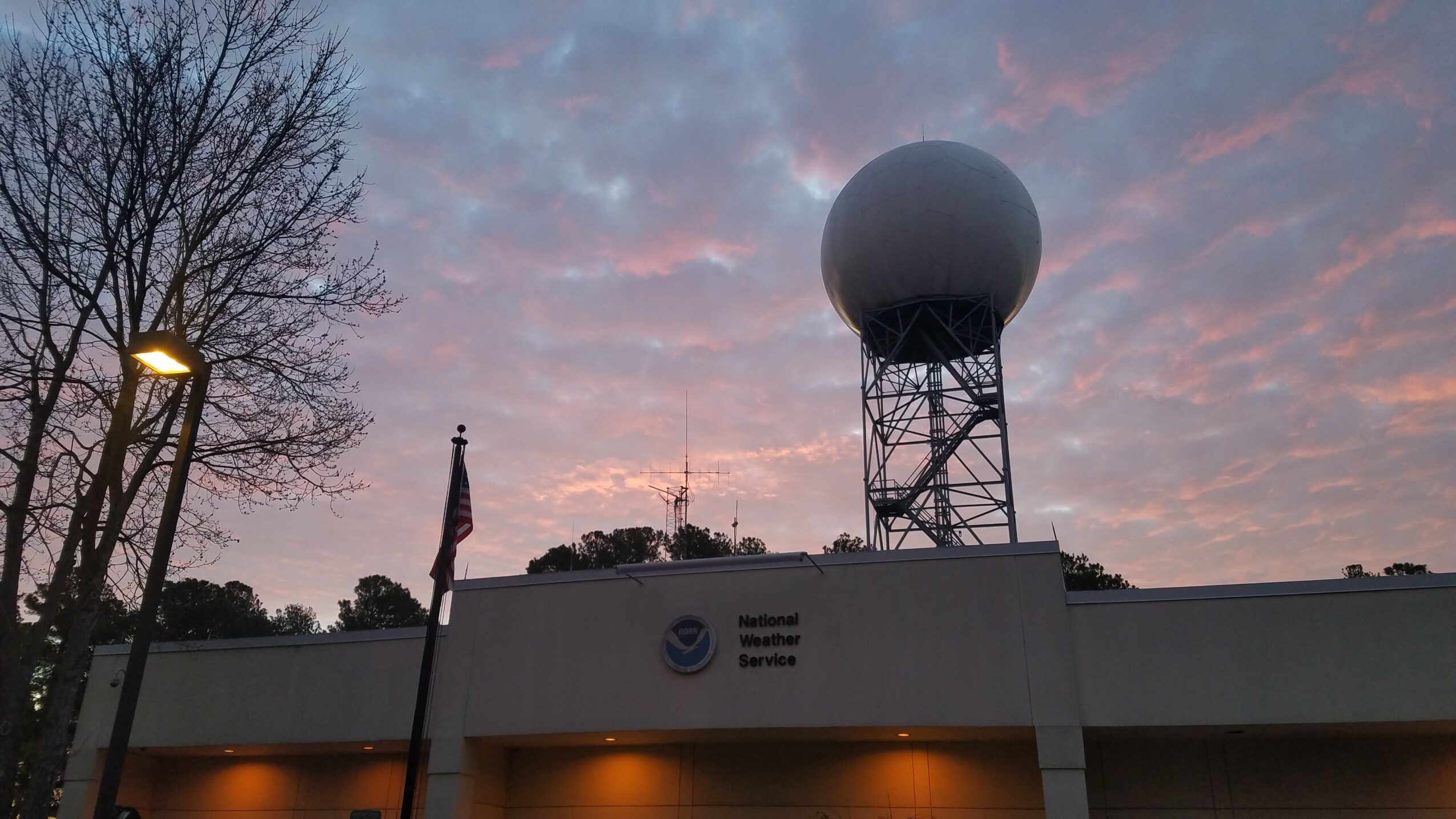
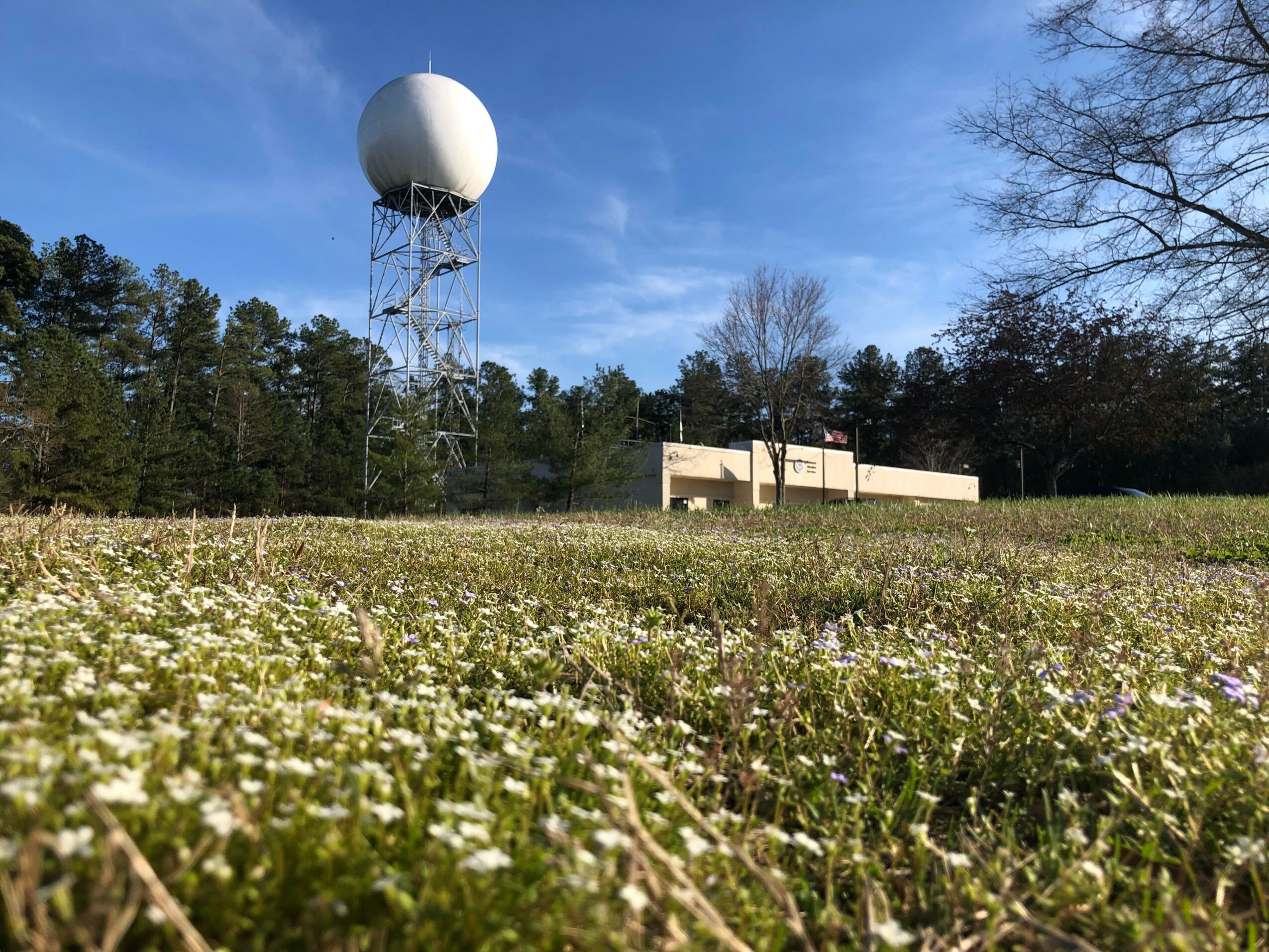
Here at our office in Greenville-Spartanburg (located in Greer, see www.weather.gov/gsp), we are responsible for 46 counties in the western Carolinas and northeast Georgia (28 in NC, 12 in SC, and 6 in GA). By latest estimates, we serve almost 5.6 million residents. Fully staffed, our office has 19 degreed meteorologists plus support staff, with at least two meteorologists on shift 24/7. Our office structure is as follows:
-Meteorologist in Charge: Responsible for the the overall office operations.
-Warning Coordination Meteorologist: Liaison with external customers (such as emergency managers and the media), and oversees all outreach/preparedness activities.
-Science and Operations Officer: Oversees science (especially science infusion into forecast and warning operations), research, and training in the office.
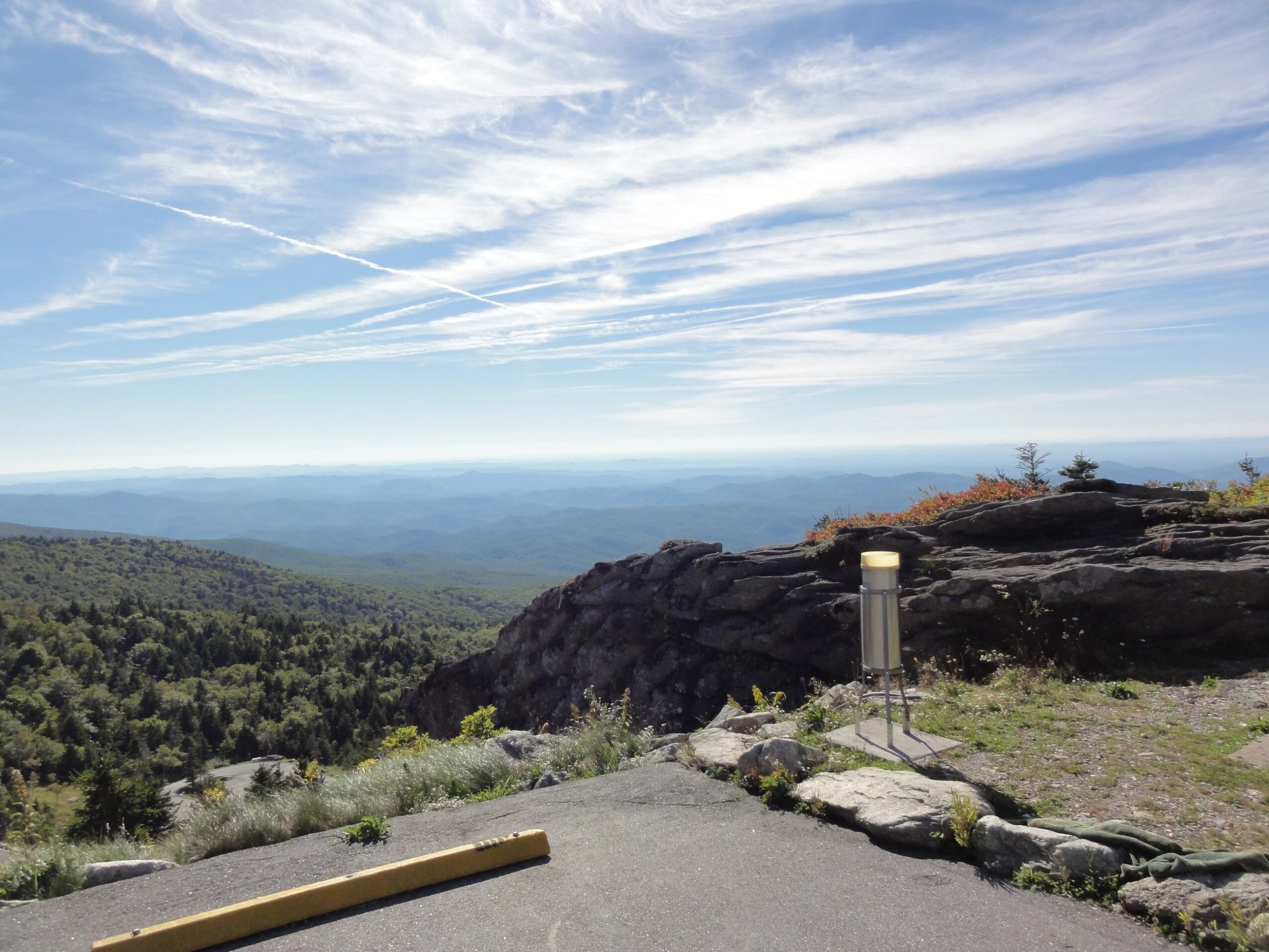
-Electronics Systems Analyst: In charge of all systems and technology inside and outside the office. This includes but is not limited to all computers, the WSR-88D radar, NOAA Weather Radios, ASOS observation equipment, etc.
-Administrative Support Assistant: Handles administrative tasks such as accounting for property, purchasing supplies, assisting other staff members with travel orders and time cards, etc.
-Senior Service Hydrologist: In charge of all hydrological operations in the office, including coordinating with water resources and emergency management partners, issuing hydrologic products (especially during major events), and maintaining information about rivers and streams across the area.
-Observations Program Leader: Oversees data retrieval at the office, and in charge of the Cooperative Observer Program.
-Information Technology Officer: Writes and implements computer programs/codes, either local enhancements or nationally-provided, and troubleshoots existing programs.
-Lead Meteorologists (6): Issue forecasts and warnings on a rotating schedule. Each is also responsible for a certain program or for serving on an office team, assisting the SOO or WCM with tasks related to that program/team (examples might include Winter Weather Program Leader, Severe Weather Program Leader, Outreach Team, etc). Serves as shift supervisors, responsible for the day-to-day operations during the shift.
-Meteorologists (8): Issue forecasts and warnings on a rotating schedule. Each is also responsible for a certain program or for serving on an office team, assisting the SOO or WCM with tasks related to that program/team (examples might include Winter Weather Program Leader, Severe Weather Program Leader, Outreach Team, etc).
-Electronics Technicians (2): Assists with maintaining systems and technology inside and outside the office. This includes but is not limited to all computers, the WSR-88D radar, NOAA Weather Radios, ASOS observation equipment, etc.
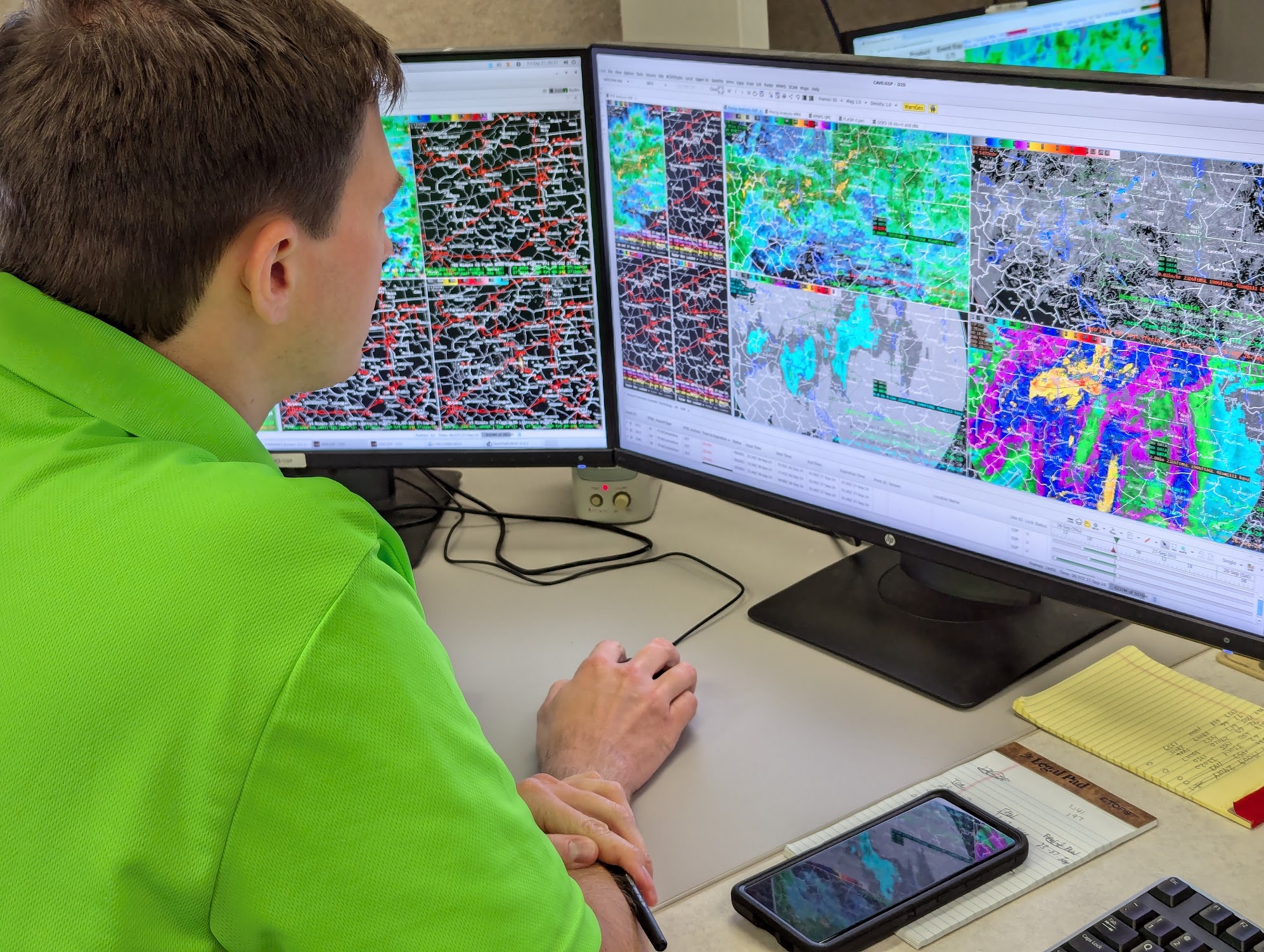
We are here to serve the residents of the western Carolinas and northeast Georgia during high-impact weather events. When you see a warning on your phone, or scroll across your TV screen, that originates from our office, from a dedicated meteorologist sitting at a workstation, evaluating the situation, and making a go/no-go decision on whether or not to warn. We live in the area we serve and are impacted by the weather here, too. We take our jobs seriously, and every single meteorologist here became a meteorologist because of a passion for weather, and joined the NWS because of a desire to serve.
Is there anyone you’d like to thank or give credit to?
For the NWS, our success is measured by protection of life and the mitigation/prevention of property damage during high-impact weather events. However, sometimes, the events are on such a scale (think Helene) that there’s little you can do to avoid property damage, and the focus needs to be on lifesaving activities. In that respect, credit goes first to the individuals out there, the residents who are weather-aware, helping us to create a Weather-Ready Nation. Knowing what to do in the event of a major weather event, and maintaining awareness of the forecast via trusted resources (us here in the NWS, your favorite TV meteorologist, etc.; be very careful listening to what we call “social media-rologists” who are just out for clicks and likes) is the first step.
The next line of defense and a massive amount of credit for seeing communities through weather-related disasters is local first responders and emergency management (including volunteers), those who are boots-on-the-ground on the front lines during a disaster. The scope increases as the scale of the disaster increases, to a state response and then federal, all of whom are our partners. But since disasters begin and end locally, it is critically important for us to maintain relationships with LOCAL partners.
Contact Info:
- Website: https://www.weather.gov/gsp
- Facebook: https://www.facebook.com/NWSGSP
- Twitter: https://x.com/NWSGSP
- Youtube: https://www.youtube.com/NWSGreer