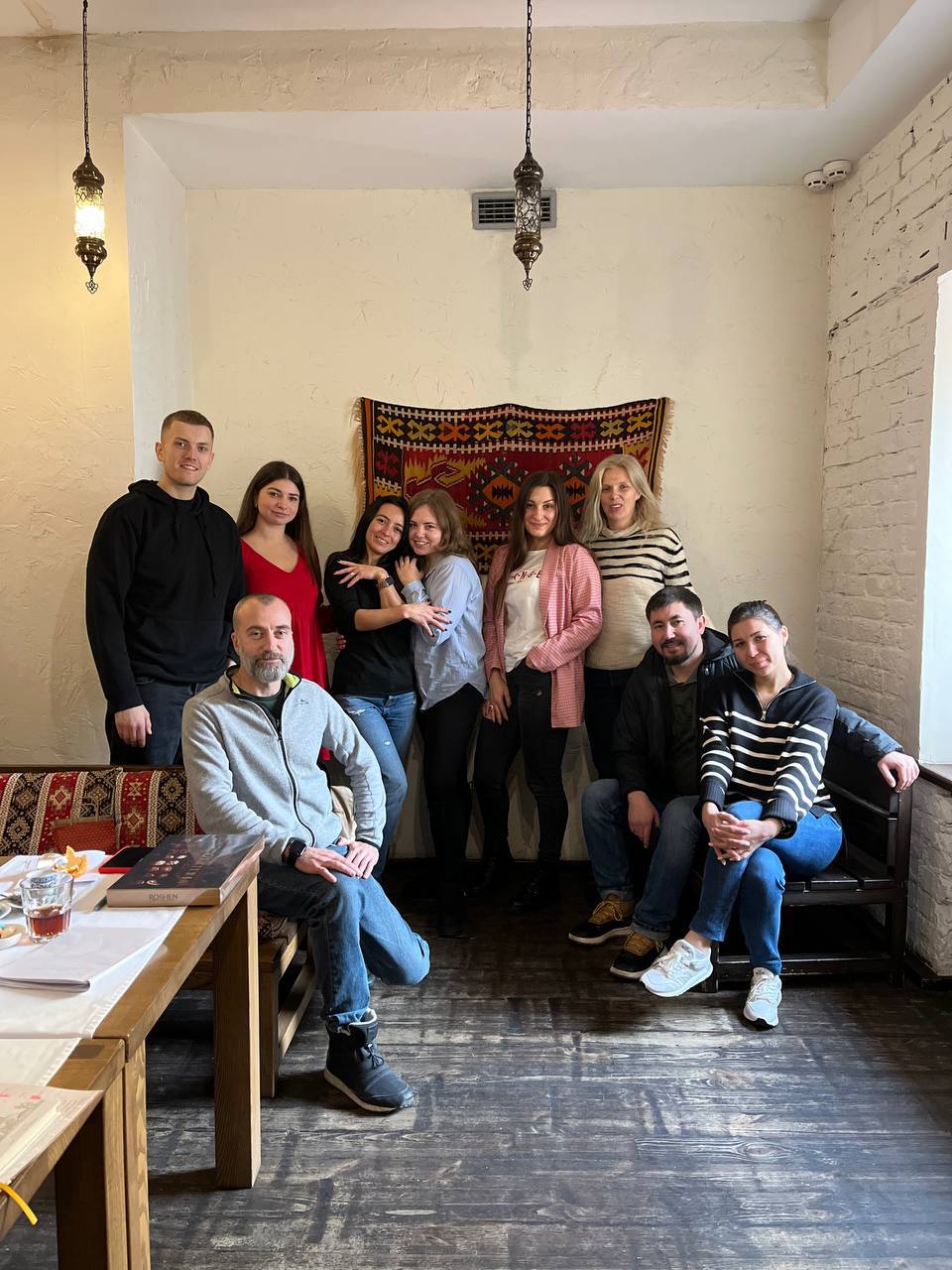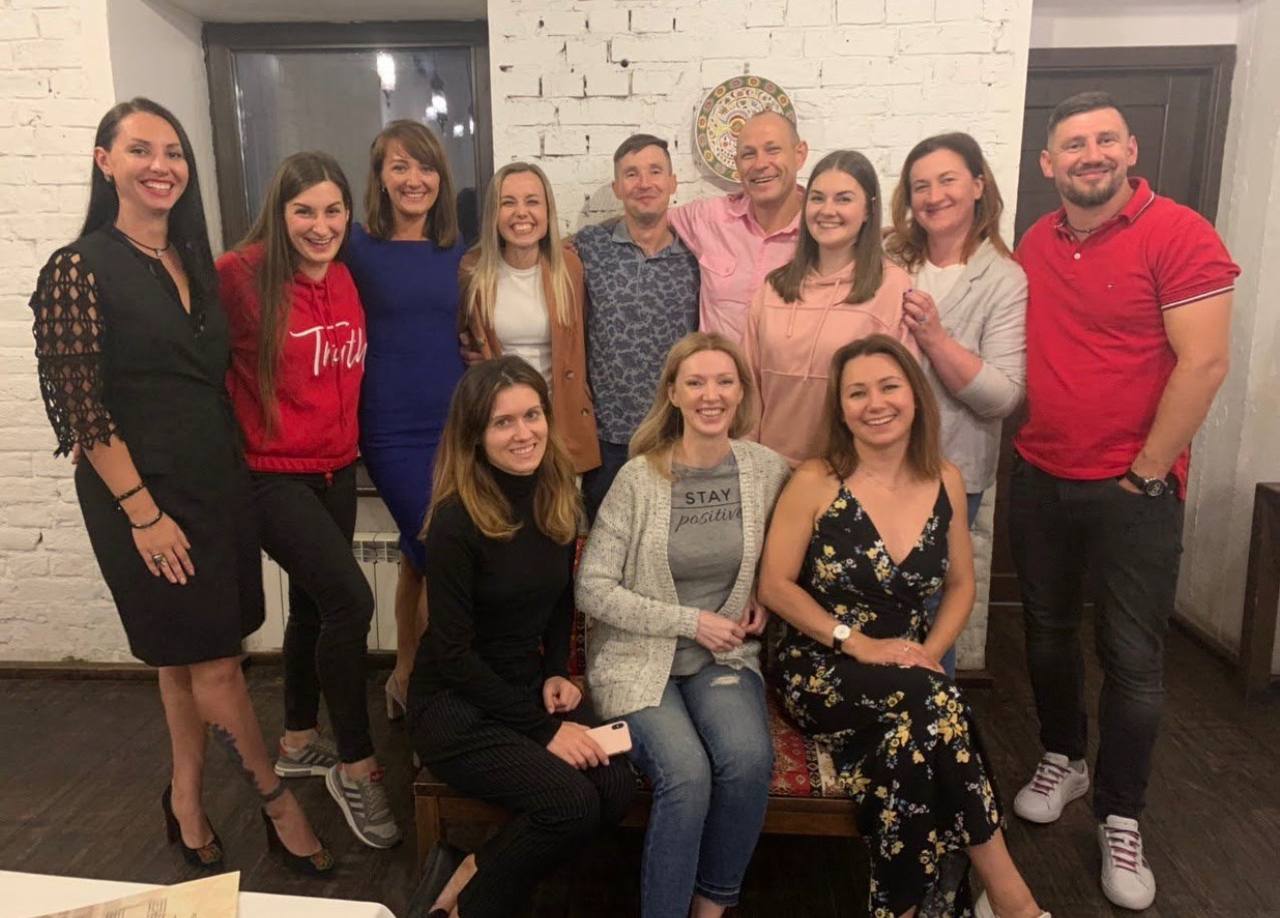

Today we’d like to introduce you to Anna Honchar.
Hi Anna, we’re thrilled to have a chance to learn your story today. So, before we get into specifics, maybe you can briefly walk us through how you got to where you are today?
If you had met me before my first Toastmasters meeting, you probably would not have guessed that I would eventually teach public speaking. I certainly would not have guessed it myself.
My background is in engineering. I earned a bachelor’s degree in biomedical engineering in 2017 and a master’s in telecommunications and radio engineering in 2019, both with honors. Studying was hard for me, and I had set myself the goal of graduating with honors. I followed through.
My master’s thesis defense also gave me an early lesson in how much communication matters. Knowing your subject is one thing; presenting it convincingly and responding to an unexpected question is another.
A professor on the examination committee asked me about a coefficient in one of my formulas. In that moment, I couldn’t clearly recall its significance. Instead of immediately saying, “I forgot,” I replied, “Thank you for that question. May I come back to it at the end of my presentation?”
That gave me time to recall what the coefficient represented while I continued presenting. It was a small moment, but it stayed with me. I saw how much it helps to stay composed and give yourself time to think, even when a question catches you off guard.
Around the same time, I started working in media as a creative editor, scriptwriter, and journalist. I was working with stories and thinking about how to communicate ideas. But being able to work with words did not mean I felt comfortable standing in front of an audience. Prepared presentations felt manageable. Speaking without preparation was a different challenge.
That became very clear in February 2019, when I attended my first meeting at Friends Toastmasters Club in Ukraine, part of Toastmasters International. There were around thirty people in the room, and I was asked to give an impromptu speech. I struggled to put my thoughts into words. It was an uncomfortable beginning for someone who would later become a communication trainer!
But I went back. I joined the club and began practicing. Over time, I took on more responsibility, first as Vice President Public Relations and then as President in 2020–2021.
My presidency coincided with the pandemic. Our club had to move to virtual meetings while keeping members involved and supporting their progress. That year taught me how much leadership depends on creating an environment where people feel comfortable trying, making mistakes, and stepping up.
Gradually, public speaking became my profession. I began conducting consultations, workshops, and training sessions, and I created my own course, ZAHOVORY (Ukrainian for “start speaking”), on voice, diction, and delivering a “wow” speech. The name reflects my motto: speak up and make yourself known.
The course combines voice work, diction, and presentation skills with structured practice that builds confidence. I work with students, professionals, entrepreneurs, and people stepping into new roles. Their situations are different, so the approach needs to be tailored to each person. A person preparing a presentation needs feedback they can actually use when they stand up to speak again.
That is a part of teaching I care deeply about. I want someone to leave a session knowing what to practice next. Encouragement helps, but so does a clear explanation of what needs attention and how to work on it.
Later, I moved from Ukraine to the United States while seven months pregnant. Becoming a mother and settling into a new country happened at the same time, and I kept finding ways to continue my career.
In the United States, I stayed active in the public speaking community and continued judging speech contests. My work has also included mentoring, university workshops, and reviewing conference submissions in the field of communication.
Coaching and judging have given me two different perspectives. As a coach, I see the preparation: the practice, the revisions, the things a person finds difficult. As a judge, I hear the finished speech and consider how clearly it connects with an audience. That experience helps me give more specific feedback.
Questions that come up in teaching make me want to look deeper and explore what other researchers have found. In one of my published articles, I examined approaches to developing public speaking skills through distance learning.
One idea I explored was how recording a speech and watching it back can help learners notice their pace, pauses, and intonation. Combined with thoughtful feedback, that gives them something concrete to work on before their next attempt. I care about that connection between research and teaching: understanding how people learn, then using that knowledge to make the next practice session more effective.
Today I work as a public speaking trainer and communication coach. On paper, engineering, media, leadership, and teaching look like an odd mix. In practice, engineering taught me to break a problem into steps, and media taught me to shape a story. I use both every time I help someone prepare a speech.
And I still remember that first difficult speech. An awkward beginning can be the start of something meaningful. Mine was. So if you’re afraid to speak in front of people right now, I understand. That’s where I started, too.
Would you say it’s been a smooth road, and if not what are some of the biggest challenges you’ve faced along the way?
No, it hasn’t been a smooth road. Even when I was moving forward, I didn’t always feel confident about what I was doing.
The first struggle was the gap between preparing something well and responding in the moment. I could rehearse a script, but at my first Toastmasters meeting, an impromptu speech left me struggling to express myself, even though I worked with words in media. Going back meant letting people see me learn, awkward parts included.
Later, leading Friends Toastmasters during the pandemic brought a different challenge. I became president just as our meetings moved from in-person to online, and our club depended on interaction that was suddenly harder to create through a screen. We adapted. For the first time, I invited speakers from Europe, and I began leading articulation warm-ups based on my own method. By the end of my term, we had completed all 10 goals of the Distinguished Club Program and earned President’s Distinguished status, despite the pandemic. I was learning how to support other people while adapting myself.
Then came the move to the United States, when I was seven months pregnant. My son was born here. The language was the first barrier, and I avoided conversations. Motherhood also limited how much I could show up as a specialist, and I felt as if I was losing a part of myself. My clients were in Ukraine, so I had to rebuild my professional identity almost from scratch.
In Ukraine, I understood the market and what people needed. Here, I had to start over and look for clients. Some stayed with me despite the time difference. One, a manager at a large agribusiness company, began hosting a podcast and recording videos with experts in her field as part of her work at the company. Another, an aesthetic medicine doctor, overcame her fear of recording videos, improved her diction and breathing, started promoting her services on social media, and opened her own practice. Continuing to work with those clients helped me stay connected to my profession while so much else in my life was changing.
One thing that stood out to me in the United States was how much attention public speaking receives, starting at a young age. Through judging speech contests, I saw young people already practicing how to present ideas and speak in front of an audience. I had to find my own place in that environment. Judging local contests and getting to know other people in the field helped me build those connections.
I also noticed that many mothers around me wanted to return to work or start something new after maternity leave, but struggled to present themselves publicly. I ran a survey asking whether they would like to study remotely, and 75 mothers responded. I began offering them workshops and training, and some later joined my course. I also started working with university students, including future journalists and others whose fields involve communication.
Teaching what I learned from my own experience is an ongoing challenge, because what helped me won’t help every student in the same way. Recording yourself on video is a good example. For many students, it is the hardest exercise. They dislike how they look, how they hold themselves in front of the camera, and how their gestures and voice come across. Hearing their recorded voice and watching themselves on screen can feel unfamiliar and uncomfortable. They may also compare themselves with famous speakers.
Simply telling them to record and review did not work. So I started with short video messages on Telegram to help students get used to speaking on camera. One student added me to the Close Friends list on Instagram and recorded videos only for me. After about fifteen private videos, the student felt ready to start posting talking stories publicly. That experience is also why research matters to me: I want to examine my observations alongside existing research, including my own published article on distance learning, and keep questioning my approach.
Looking back, each difficult period called for something different. Sometimes I needed more practice. Sometimes I needed to adapt, ask questions, or give myself time. Now, when a student is frustrated by their progress, I make the next step smaller: a shorter task, an audience of one person, a recording nobody else will see. I remember how much effort can sit behind a moment that looks simple from the outside.
Thanks for sharing that. So, maybe next you can tell us a bit more about your business?
My company in the United States is ZAHOVORY LLC. The name ZAHOVORY means “start speaking” in Ukrainian. I chose it because getting started is often the hardest part. A person may have years of experience, a business they care about, a book they have written, or an idea worth sharing, and still hesitate when it is time to speak. That is where my work begins.
Through ZAHOVORY LLC, I offer individual coaching, workshops, training sessions, and my public speaking course, also called ZAHOVORY. I focus on voice, diction, breathing for speech, presentation skills, and feeling at ease in front of people or on camera. My clients include professionals, entrepreneurs, IT specialists, writers preparing to pitch their books, students, mothers returning to work, and people preparing for a new stage in their careers.
I begin with an assessment, using my own evaluation protocol. Before we practice anything, I ask what the person actually needs to do. Are they preparing a presentation? Pitching a book to an agent or publisher? Explaining a technical project? Hosting a podcast? Then I look at where they are now. I listen to how they organize their thoughts, how they breathe, how their voice and diction work, and I watch what their body does while they speak. Many people touch their hair, bite their lips, or fill pauses with “um” and other filler words without noticing it.
After that comes detailed feedback, which matters a great deal to me. “Well done” can be encouraging, but it does not tell you how to improve. I want to be able to say: this part of your explanation was clear; here you rushed through an important point; you touched your hair every time you started a new thought; you said “um” before each answer. Try a pause here and listen to the difference. Once people can see their habits, they can change them. Then we practice again.
That assessment also helps me decide how big the first step should be. If recording a video feels overwhelming, we begin with a short private video message. If speaking to a group is too difficult, we begin with one listener. The goal still matters, but the first step has to be something the person is willing to try.
Often, the first goal is simply to get someone talking. For that, I use a few simple techniques. My favorite is to imagine yourself as an object and tell the story of your day from its point of view. Students also love the “traffic light” exercise: you become a traffic light and describe what is happening around you. Another option is to talk about the last photo in your phone. These exercises are basic, but they let a person start speaking without trying to impress anyone, and that makes it easier to move on to the other exercises in my training.
Judging trains me to listen closely to many speakers, and research keeps me questioning my own approach. In a published article on public speaking in distance learning, I explored how practice, reviewing recordings, and feedback can work together. That research shapes how I teach.
What I am most proud of is seeing people use these skills outside our sessions: recording videos, hosting conversations, and promoting their work publicly. Those are meaningful steps because the person is taking their knowledge into a conversation they previously found difficult to enter.
I want readers to know that they can come to me with a specific challenge, even if they do not yet feel like a speaker. You do not need to arrive confident or have a polished presentation ready. We can begin with the idea you want to express and the situation you are preparing for. My job is to help you find a workable way forward, practice it, and gradually become more comfortable speaking up and making yourself known.
Can you share something surprising about yourself?
People might be surprised to know that I sometimes imagine interviews with famous people. I think about what I would ask them, then turn it around and imagine what they might ask me. I improvise my answers, too. For someone whose first impromptu speech went badly, that is a fun full-circle moment, and now that I’m answering questions for a real interview, I have to smile a little!
Outside work, I enjoy cooking and painting by numbers. I like having something to do that doesn’t involve preparing a speech or giving feedback.
I also have a little routine before a presentation or a class: I like to listen to loud music or watch an entertaining show to lift my mood. That helps me get into the energy I want to bring to the session.
And people are often surprised by my engineering background. When they hear that I studied biomedical engineering and later earned a master’s in telecommunications and radio engineering, they ask how I ended up teaching public speaking. Engineering probably wouldn’t be their first guess! But it taught me to break a problem into steps, and that is exactly how I help people prepare a speech.
Pricing:
- Pricing varies depending on the format and scope of training. Please contact me for details.
Contact Info:
- Email: honcharann@gmail.com