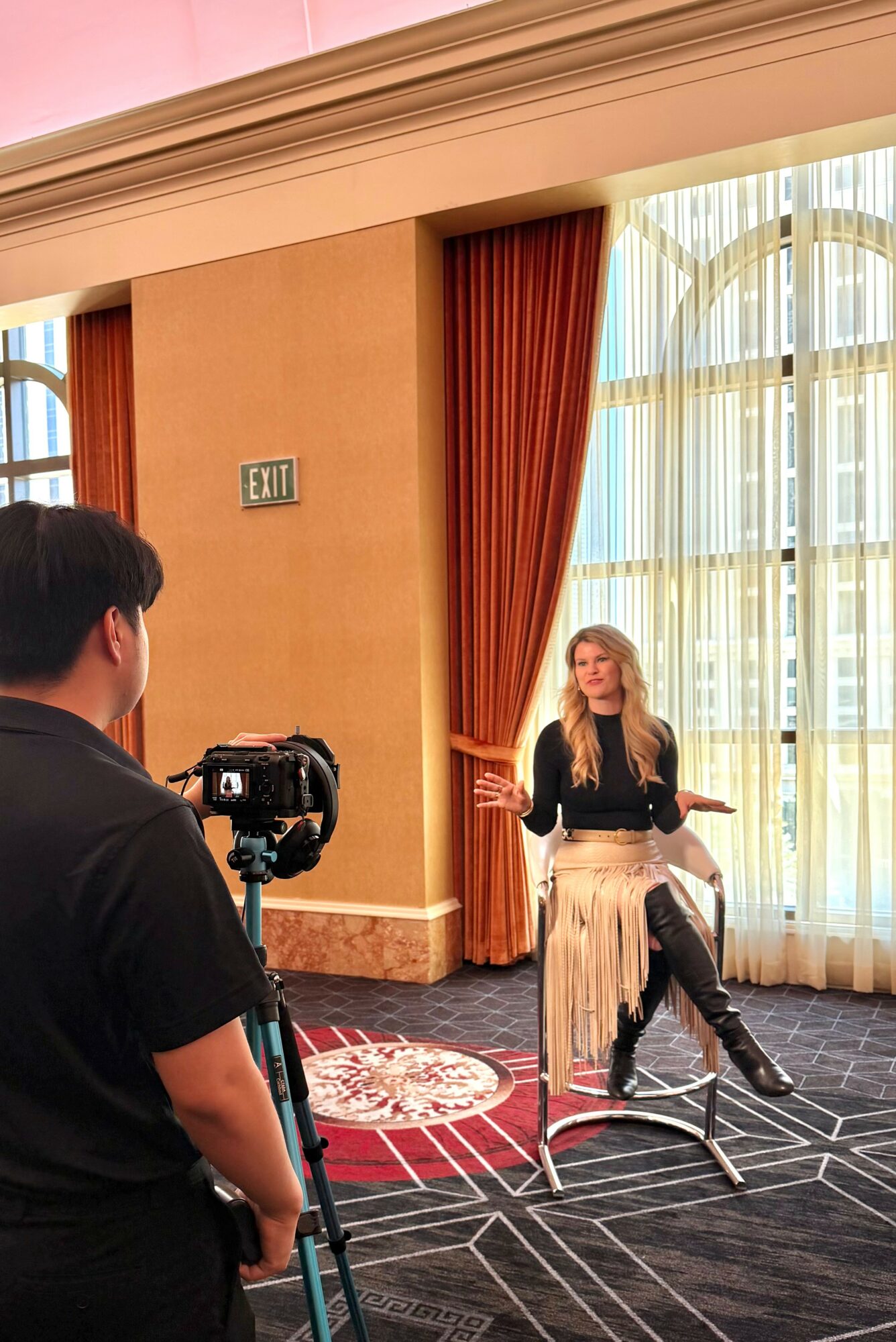
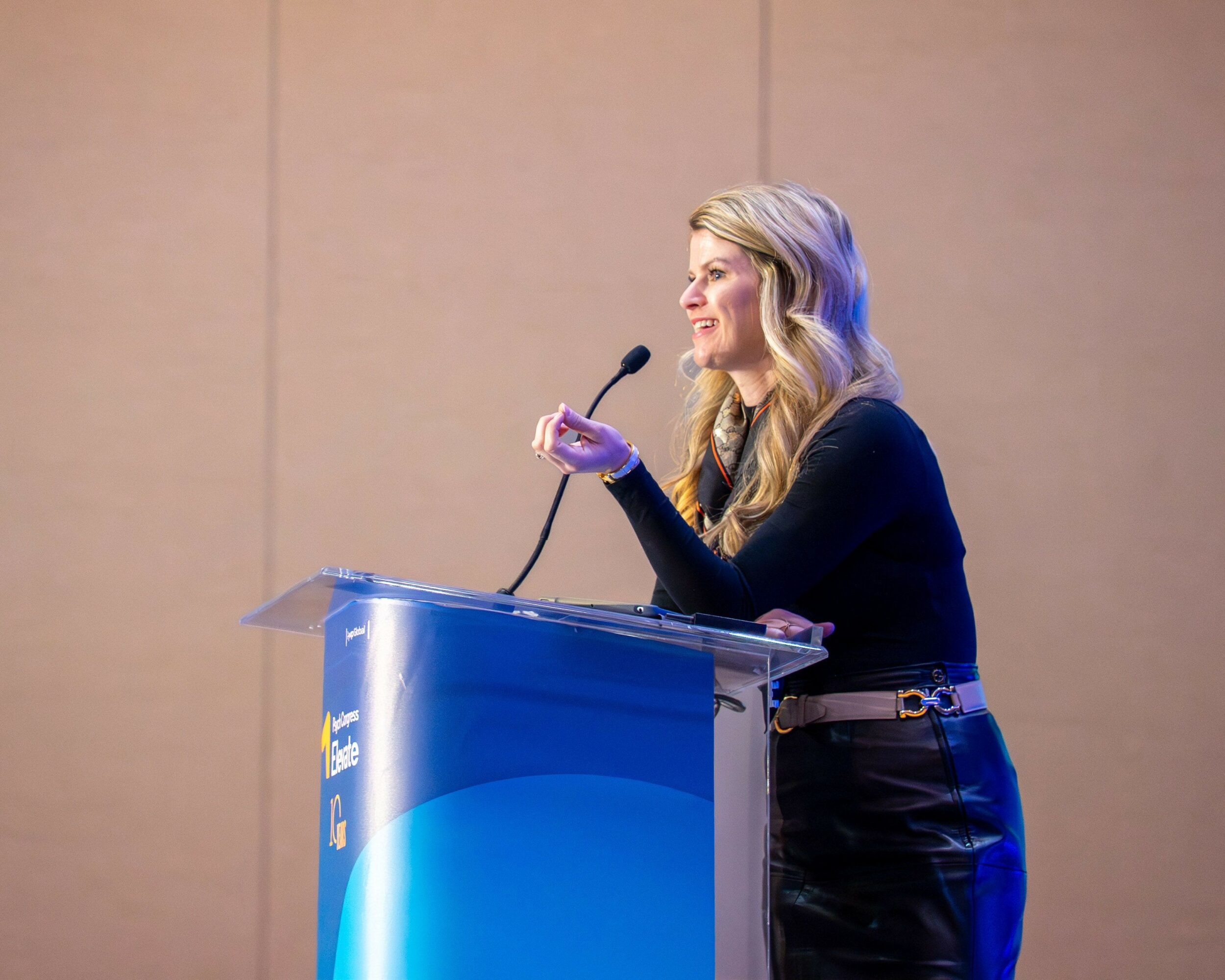
Today we’d like to introduce you to Brittany Albright.
Hi Brittany, it’s an honor to have you on the platform. Thanks for taking the time to share your story with us – to start maybe you can share some of your backstory with our readers?
My story really starts with a question I couldn’t shake: why is it so hard for people to access care?
During college, I studied abroad and saw how other countries approach universal healthcare. It made the gaps in our system impossible to unsee. That led me to work on my master’s degree in public health before medical school.I knew early on that I wanted to have an impact beyond one patient at a time.
Three things pulled me toward psychiatry specifically. The first: Growing up in New Mexico, addiction touched so many facets of my life. It wasn’t abstract, it was personal, affecting family members, friends, classmates. Fun fact: Breaking Bad was literally filmed at my public high school. People laugh when I say that, but honestly, that show got something right about how substance use runs through a whole community, not just an individual. There’s no demographic that gets to escape the grips of this relentless disorder.
The second was a research project I started as a high schooler, interviewing pregnant women in an obstetrics and gynecology waiting room about their alcohol and drug use. I went in naive, and those women changed the whole trajectory of my career. I kept doing substance use research through college and medical school, and what I learned was that addiction isn’t simply an individual problem: it’s a societal one.
The third was a dog. I adopted a homeless dog off the streets named Gizmo. I cleaned up his matted fur and terrible breath and turned him into a volunteer therapy dog. For eight life changing years we visited psychiatric units, schools, libraries, pediatric oncology wards. juvenile detention centers, and long-term care facilities. I watched incarcerated teens carrying unimaginable trauma completely soften when they stroked his fur. Those kids had turned to gangs and drugs to survive broken worlds, and they ended up incarcerated instead of getting the psychiatric care they desperately needed. Gizmo taught me how to be nonjudgmental with the most stigmatized patients. Honestly, Gizmo taught me how to be a great physician.
From there I trained in adult psychiatry at Massachusetts General and McLean Hospitals, then did my addiction psychiatry fellowship at the Medical University of South Carolina (MUSC). I’m now triple board-certified in adult psychiatry, addiction psychiatry, and obesity medicine, and I teach at MUSC as an affiliate assistant professor.
Desiring a space that allows for exceptional clinical care and physician autonomy, I started Sweetgrass Psychiatry as a solo practice in 2018. It was a big leap. I had no funding. I had a lot of real life responsibilities – 4 dogs, a 4 month old baby, and a 2 year old toddler – in addition to medical school debt. To make ends meet (and because I loved the work!), I also worked a second job providing emergency room psychiatry assessments to 28 different rural hospitals.
I want to be clear: I did not set out to build a big practice. I wanted a clinical environment where patients got excellent care, where I could take insurance and actually do psychotherapy, and where clinicians didn’t burn out trying to deliver it. I was told what I wanted was impossible, that you can’t take insurance and offer high-quality, innovative care and stay viable, especially if you are going to spend time actually sitting down and listening to your patients.
Today we’re the largest physician-owned psychiatry practice in South Carolina: three locations, and around 25 clinicians. We take insurance, and we offer the treatments that are genuinely changing outcomes: transcranial magnetic stimulation, esketamine, weight loss support, medication management, and psychotherapy.
If there’s a through line, it’s this: I believe human life is sacred, and everyone deserves timely, affordable, high-quality mental health care. Also, one of my greatest accomplishments (besides my marriage to my high school sweetheart!) has been to provide job opportunities to over 30 families, with real flexibility for working parents, and that matters to me almost as much as the patient care does.
Beyond the practice, I serve as President of the South Carolina Psychiatric Association, co-chair Psych Congress Elevate, and started the Private Practice Summit because I wanted other clinicians to have the roadmap I didn’t have.
But if you asked me what I’m actually chasing underneath all of it… it’s joy. In my patients’ lives, in my family’s, in my friends’, in my colleagues’, and in my own adventures. That’s why I started Bring Your Baggage, a travel and mental health blog. The name works both ways: the bags you pack, and the emotional baggage we all carry. I believe travel can be a genuine tool for healing; a way to confront what you’re carrying and set some of it down. Healing and adventure aren’t separate tracks to me.
My actual dream? That we get so good at treating and preventing mental illness that I’m out of a job and can finally just binge Netflix on the couch… or better yet, get on a plane!
Would you say it’s been a smooth road, and if not what are some of the biggest challenges you’ve faced along the way?
No. Not remotely smooth. And I think it’s important to say that authentically, because the version people see now probably looks relatively effortless. It wasn’t. I had to fail upwards.
The money was terrifying at the start. I came out of training fresh, with significant educational debt and two young children, and then decided to build something. There’s no salary cushion when you’re the founder. Choosing to take insurance made that harder, not easier: the margins are thinner, the reimbursement is slower, the administrative burden is enormous. I chose the hard version on purpose because it was consistent with my values, and then had to live inside that choice.
I was too trusting. This is the one that stung the most. I assumed everyone was operating with the same good intentions I was — that if I was fair and generous, people would be fair and generous back. That’s not how it always works. I’ve been burned by people I trusted, in ways that cost me money, time, and a fair amount of faith. I’ve had to learn to build actual structures: contracts, accountability, clear expectations, rather than just relying on goodwill. That was a hard lesson for someone whose whole professional instinct is to see the best in people.
The time away from my family is the cost I feel most. I’ve sacrificed hours I don’t get back. Evenings, weekends, presence. I was trying to juggle running a business while breastpumping between patients, literally scheduling my day around it, and trying to be everything to everyone. Everything for my patients, everything for my staff, everything for my kids. You can’t actually be everything to everyone, and I spent years trying anyway.
That struggle is actually why the practice is built the way it is. I’m relentless about flexibility for our team, especially working mothers, because I lived the version where that flexibility didn’t exist with my first child. When I say I care about preventing burnout, I’m not speaking theoretically, I’m speaking as someone who came close.
And I’d add: I don’t think entrepreneurship in medicine is talked about honestly enough. We’re trained to be clinicians, not business owners. Nobody taught me how to read a profit & loss report, negotiate a lease, or handle credentialing. I learned it all the expensive way. That’s a big part of why I started the Private Practice Summit, so the next clinician who wants to do this doesn’t have to bleed for the same lessons I did.
Thanks for sharing that. So, maybe next you can tell us a bit more about your business?
Sweetgrass Psychiatry is South Carolina’s largest physician-owned psychiatry practice with three locations and about 25 providers. We’re outpatient mental health, obesity medicine treatment, interventional psychiatry treatment, and addiction treatment. We see patients in person and via telemedicine across the state.
What we actually do: We’re built to be comprehensive, so a patient doesn’t have to assemble their own care team from scratch. Our team includes psychiatrists, licensed social workers and professional counselors, psychiatric nurse practitioners, and physicians assistants, plus the infrastructure most people never think about but that determines whether care actually happens: a practice director, a billing manager, a credentialing team, patient care coordination team, a prior authorizations manager. That back office is a deliberate investment. It’s how we protect both our patients and our clinicians from the administrative machinery that grinds all of us down.
What we specialize in: General adult psychiatry, interventional psychiatry, child and adolescent psychiatry, couples therapy, individual therapy, addiction psychiatry shape the practice. We offer TMS (transcranial magnetic stimulation) and esketamine: the neuromodulatory treatments that are genuinely changing outcomes for people with depression who’ve cycled through medication after medication without relief. We treat substance use disorders with the same seriousness as any other medical condition. And we’re conservative with medications by design- that’s actually one of our stated values. More prescribing isn’t better psychiatry.
What sets us apart — and this is the thing I’m proudest of — is that we take insurance. I was told repeatedly that you cannot do this. That you can’t offer high-quality, innovative, cutting-edge psychiatric care, take insurance, pay clinicians well, and stay viable. Pick two, maybe three. The prevailing model in this field has become cash-pay concierge psychiatry, and I understand why — it’s easier. But it means the innovations end up available only to people who can afford them out of pocket. That’s not the field I want to work in.
So a patient in South Carolina can come to us, use their insurance, and access TMS or esketamine or comprehensive addiction treatment. That’s the whole point.
Brand-wise, what I’m most proud of has two parts. The first is patient-facing: thousands of people across South Carolina have gotten timely, affordable, high-quality care in beautiful office spaces that they were told would take six months to access or would cost them thousands. The second is internal: we provide careers and incomes for over 30 families, with real flexibility, particularly for working parents. I built the practice I wished existed when I was pumping between patients trying to be everything to everyone. Preventing clinician burnout isn’t a wellness initiative here, it’s an operating principle.
A few other things I’d want your readers to know:
We’re invested in education. We host internships and training experiences for local graduate students: counseling, nursing, psychiatry residents. I’ve mentored many clinicians, and I teach at MUSC as an affiliate assistant professor. Growing the next generation of mental health providers in South Carolina is part of the mission.
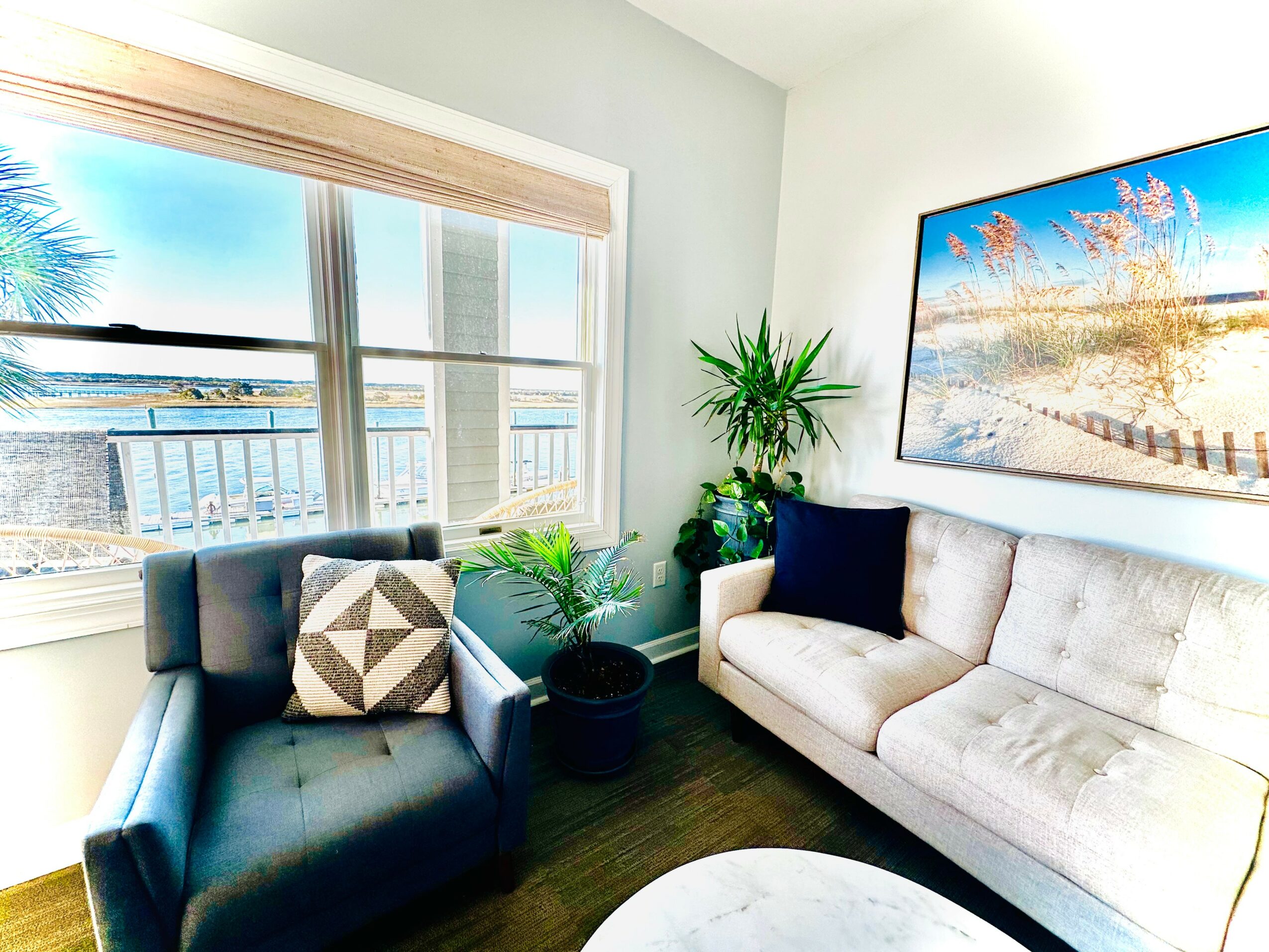
We care about the environment people walk into. Our offices are warm and beautiful on purpose. When someone is at their lowest, the space they sit in matters. Nobody should feel like they’ve walked into a DMV to talk about the hardest thing in their life.
Our vision is a community where your neighbors have access to effective, affordable, holistic mental health care: body, mind, spirit, community. That’s not marketing copy for us. That’s the thing I was told was impossible, and it’s what we’ve spent eight years building.
Where do you see things going in the next 5-10 years?
I think we’re at the beginning of the most significant shift psychiatry has seen in fifty years. Three things stand out to me.
Psychedelics are going to be approved, and the field needs to be ready. I expect FDA approval for anxiety and mood disorders around 2027. That’s not far away. And approval is actually the easy part- the harder questions are the ones we should be working on right now. Who administers these treatments and with what training? What does safe use actually look like in a real outpatient setting? What are the best practices, the screening protocols, the integration therapy standards? And critically: will insurance cover it, or will this become another innovation available only to people who can pay cash?
I’ve watched that pattern play out already with ketamine and esketamine. The science arrives, and then access lags years behind, stratified by income. I don’t want to repeat that. My hope is that we build the reimbursement and safety infrastructure in parallel with the approvals rather than scrambling afterward.
AI is going to be part of standard practice, and I think that’s genuinely good news… if we use it right. Right now, so much of a clinician’s day goes to documentation, prior authorizations, claims, and administrative work that has nothing to do with the patient in front of them. That’s a huge driver of burnout, and it’s a huge driver of cost. If AI can absorb that layer, we get time back. Not to see increased numbers of patients faster but to actually be present with the ones we’re seeing.
The way I think about it is that technology should bring humanity back into medicine, not push it out. The risk is obvious: that we use AI to replace the relationship rather than protect it. I don’t think an algorithm should be doing the therapeutic work. But if it means I’m looking at a patient instead of a screen, that’s a profound improvement.
Treatment is getting far more precise and personalized. We have practiced trial-and-error prescribing for decades — try this SSRI, wait six weeks, try another. That era is ending. Between pharmacogenomics, better biomarkers, neuromodulation targeting, and the growing understanding of neuroplasticity, we’re moving toward actually matching the treatment to the person. TMS and esketamine were early proof that we can intervene at the level of brain circuitry rather than just neurotransmitter guesswork. What comes next builds on that.
What I’m watching for underneath all three: whether the access gap widens or narrows. Every one of these advances could go either way. Psychedelics could become a luxury wellness product or a covered treatment. AI could reduce administrative burden for everyone or become another expensive vendor stack only large systems can afford. Precision psychiatry could be standard or boutique.
Contact Info:
- Website: https://www.sweetgrasspsychiatry.com and www.bringyourbaggage.com
- LinkedIn: https://www.linkedin.com/in/brittany-albright-md-mph/