
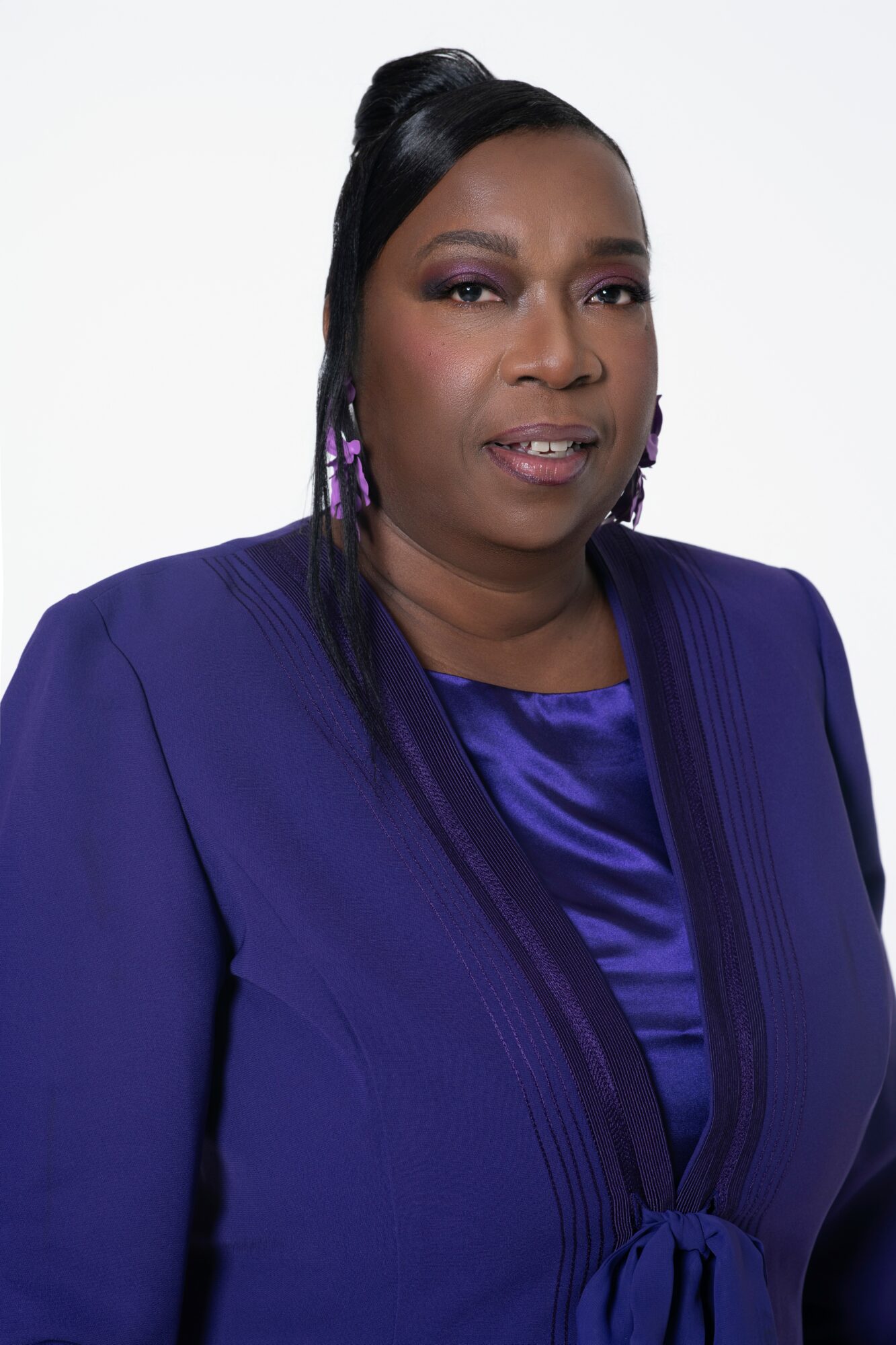
Today we’d like to introduce you to Patsy Hollman-Gardner.
Hi Patsy, can you start by introducing yourself? We’d love to learn more about how you got to where you are today?
Patsy Hollman Gardner, MA, CAAP, is a distinguished community leader, advocate, and changemaker with more than 30 years of experience in human services and social work. Her life’s work has been dedicated to serving others and strengthening communities throughout Charleston County and across South Carolina.
Mrs. Gardner is the Founder and Executive Director of A Second Chance Resource Center Network United, Inc., a 501(c)(3) nonprofit organization established in 2013. Under her visionary leadership, the organization has become a trusted provider of comprehensive, holistic services for justice involved individuals, at-risk youth, young adults, adults, and families. ASCRC’s services span holistic case management, youth mentoring, workforce development, educational enrichment, substance use prevention, transitional housing, and wraparound services, with a primary footprint throughout the state.
Looking forward, ASCRC is focused on expanding access to capital, visibility, and capacity building for directly impacted Social Entrepreneurs, leveraging the organization’s experience and success to serve as a model for other communities. Mrs. Gardner’s upcoming book, Queen of Redemption: Reign with a Purpose, Rise with Grace, will further amplify this mission, sharing personal testimony, strategies for overcoming systemic barriers, and a blueprint for holistic, community centered transformation.
A Transformational Journey
My journey has not been traditional but it has been transformational. I am a formerly justice involved woman who understands firsthand what it means to face consequences, rebuild, and rise again. There was a season in my life when I made decisions that altered my path. Walking through the criminal justice system was humbling, painful, and eye opening. But it was also the place where my purpose was reborn.
Instead of allowing my past to define me, I allowed it to develop me. I committed myself to becoming the support I once needed someone who understands both the struggle and the solution.
In 2013, I founded ASCRC on a holistic model that serves the “Whole Person” and the “Whole Family.” I created the Holistic Experience Model, balancing discipline and love to support justice-involved individuals, at-risk youth, and families as they rebuild their lives. Over the years, I have served on community councils, led reentry initiatives, developed transitional housing programs like the Phoenix Transitional House, and advocated for restorative justice and equitable opportunities.
Being proclaimed by the Charleston County Council during Black History Month, with February 10 officially declared “Patsy Hollman Gardner Day,” was truly a full-circle moment. It represents not perfection but perseverance. Not shame but strength. Not an ending but a legacy in motion.
That same spirit of purpose and perseverance is reflected in my role as a Co-Author in the Modern Proverbs 31 Women movement book a powerful collective that celebrates the strength, faith, resilience, and leadership of women walking boldly in their calling. This movement is more than a book; it is a declaration that women of purpose still rise, and that our stories have the power to inspire generations.
Today, I stand as a leader, author, advocate, and founder but above all, I am proof that redemption is real. My story is not just about overcoming; it is about transforming pain into purpose and using every chapter even the hard ones to create pathways for others to rise.
And I’m still walking the journey, with faith, grace, and intention.
Can you talk to us a bit about the challenges and lessons you’ve learned along the way. Looking back would you say it’s been easy or smooth in retrospect?
It has not been a smooth road—and I would not want to present it that way.
Rebuilding my life after justice involvement came with stigma, skepticism, and limited opportunities. There were rooms I was not invited into and doors that did not automatically open. I had to work twice as hard to prove credibility, integrity, and leadership capacity. Trust is not always easily extended to someone with a record, even when transformation is evident.
Financial sustainability has also been a challenge. Leading a nonprofit that serves justice-involved individuals means constantly navigating funding gaps, advocating for equitable resource allocation, and challenging systems that were not originally designed to support the very communities we serve. There were seasons when vision was strong but resources were limited.
Emotionally, the work itself can be heavy. Serving individuals and families who are navigating incarceration, homelessness, addiction, trauma, and poverty requires resilience. Carrying both lived experience and leadership responsibility means balancing empathy with strength, and advocacy with strategy.
There have also been personal sacrifices long hours, delayed gratification, and moments of doubt. Building credibility as a formerly justice involved woman in leadership requires unwavering faith and persistence.
But every obstacle strengthened my resolve. Every challenge refined my purpose. The struggles did not stop the journey they shaped it.
What could have been my greatest limitation became my greatest qualification. The very barriers I faced became the blueprint for the solutions I now build.
The road has not been smooth, but it has been meaningful. And every challenge has prepared me to lead with authenticity, compassion, and courage.
Thanks for sharing that. So, maybe next you can tell us a bit more about your work?
Servant leadership defines both my professional life and my personal mission. I lead to serve—not to be served.
As the Founder and Executive Director of A Second Chance Resource Center Network United, Inc., my work focuses on empowering justice-involved individuals, at-risk youth, and families through holistic case management, workforce development, transitional housing, and wraparound support services. I specialize in reentry support, restorative justice advocacy, and building sustainable pathways for individuals who have been impacted by the criminal justice system.
What I am most known for is combining lived experience with professional expertise. As a formerly justice involved leader, I understand firsthand the barriers of stigma, limited access to opportunity, and systemic inequities. That perspective shapes how I design programs, build partnerships, and advocate for policy change. I don’t just serve the community I come from the community.
I am especially proud of creating the Holistic Experience Model, which serves the “Whole Person” and the “Whole Family.” This model balances discipline and love, accountability and compassion. It addresses not only employment or housing needs but also emotional wellness, family dynamics, technology access, and long-term stability. Through initiatives like the Phoenix Transitional House and our workforce and youth programs, we help individuals break cycles and rebuild generational strength.
A critical component of my reentry work is the implementation of transitional housing through the Phoenix House, an initiative I founded to address homelessness and housing instability among justice-involved individuals. Under my leadership, three transitional houses collectively known as the Phoenix House provide safe, structured, and supportive housing for men, women, and youth transitioning out of incarceration. These homes serve as stabilizing foundations, offering residents accountability, life skills development, case management support, and access to community resources that promote successful reintegration and long term self-sufficiency.
Through strategic partnerships with community-based organizations, faith leaders, and local, state, and federal agencies, I have played a critical role in advancing collaborative solutions to issues affecting community safety, youth development, reentry, housing stability, and family preservation. My work has had a measurable and lasting impact on individuals, families, and neighborhoods across the State of South Carolina.
I have been honored with numerous awards, including the Jefferson Award for exceptional public service and the 2024 Carolina Champion of the Year – Nonprofit Organization by WCIV ABC News 4, recognizing ASCRC’s transformative work. I was invited to Washington, DC, to participate in a Department of Justice roundtable, where I contributed to national level discussions on social justice, reentry, and community based solutions.
I currently serve as Chairperson of the Tri-County Regional Reentry Council and as a Community Representative on the Charleston County Criminal Justice Coordinating Council (CJCC). I also consult for the Urban Institute in Washington, DC, lending professional expertise and lived experience to inform research, policy, and best practices.
What sets me apart is authenticity. I lead with transparency, faith, resilience, and proximity to the work. I remain actively involved not removed from the realities of those we serve. My pride comes from the lives transformed the families reunited, youth redirected, women rebuilding after incarceration, and men discovering their potential beyond their past. My success is measured by impact, not position.
Guided by the principle, “Be the change that you wish to see in the world,” I embody servant leadership and civic responsibility. Servant leadership means lifting others while staying grounded and that is the work I am called to do every day.
What do you like best about our city? What do you like least?
What I love most about is its sense of community. Charleston is rich in history, culture, faith, and resilience. There is a strong spirit of collaboration here nonprofits, churches, community leaders, and residents often come together to support one another. I appreciate how relationships matter in this city. When people believe in a cause, they show up. The culture of hospitality and the deep rooted legacy of perseverance, especially within African American communities, is powerful and inspiring.
I also value the growing conversations around equity, restorative justice, and second chances. Seeing more awareness and dialogue about reentry, youth intervention, and community based solutions gives me hope for sustainable change.
What I like least, however, are the persistent disparities that still exist. Despite Charleston’s beauty and economic growth, there remain significant gaps in access to housing, living wage employment, healthcare, and education especially for justice involved individuals and under resourced families. The rising cost of living and lack of affordable housing create additional barriers for those already working to rebuild their lives.
At times, systemic change can move slowly. While there are many who care deeply, structural inequities and generational poverty still impact too many families.
That said, I see both the challenges and the opportunity. Charleston has the heart, the leadership, and the potential to become a model city for second chances, restorative justice, and inclusive growth. I am committed to being part of that transformation.
Contact Info:
- Website: https://www.ascresource.org
- Instagram: https://www.instagram.com/ascresource/
- Facebook: https://www.facebook.com/ascresource
- LinkedIn: https://www.linkedin.com/company/ascresource/
- Twitter: https://x.com/ascresource
- Youtube: https://youtu.be/Atp1Lq8EBFU
- Other: https://modernproverbs31women.com/patsy-gardner/